Arts
Examining the role of The Arts as a catalyst for healing, transformation and action

Introduction
The practice of Art—in its infinite forms, functions and implications—is the most accessible and universal way of constructing meaning out of the world we inhabit.
Our Philosophy: The Arts are not just for experts. They are not solely for the enjoyment of the elite. They are not a superfluous extravagance. The Arts are for us all, expert and novice alike. They are not just an end in and of themselves, but a means. They shape, and are shaped by the world we inhabit.
Students in the Arts Scholars program gain a deeper understanding of the impact of art as a means to explore society and culture against the backdrop of our individual differences and shared experiences.
What you can expect: No matter your major, area of artistic interest, or skill level, as a member of our community, you will be challenged to strengthen your personal artistic skill set, experiment with new and different art forms, and gain a deeper understanding of the value of the arts in our personal and collective lives. We will investigate the power of the arts to:
- Communicate difficult concepts
- Advocate for social change
- Investigate the human experience
- Explore our own identities
- Develop our capacities as creative problem solvers and critical thinkers
- Reinforce, but also upend, existing systems of inequality and oppression
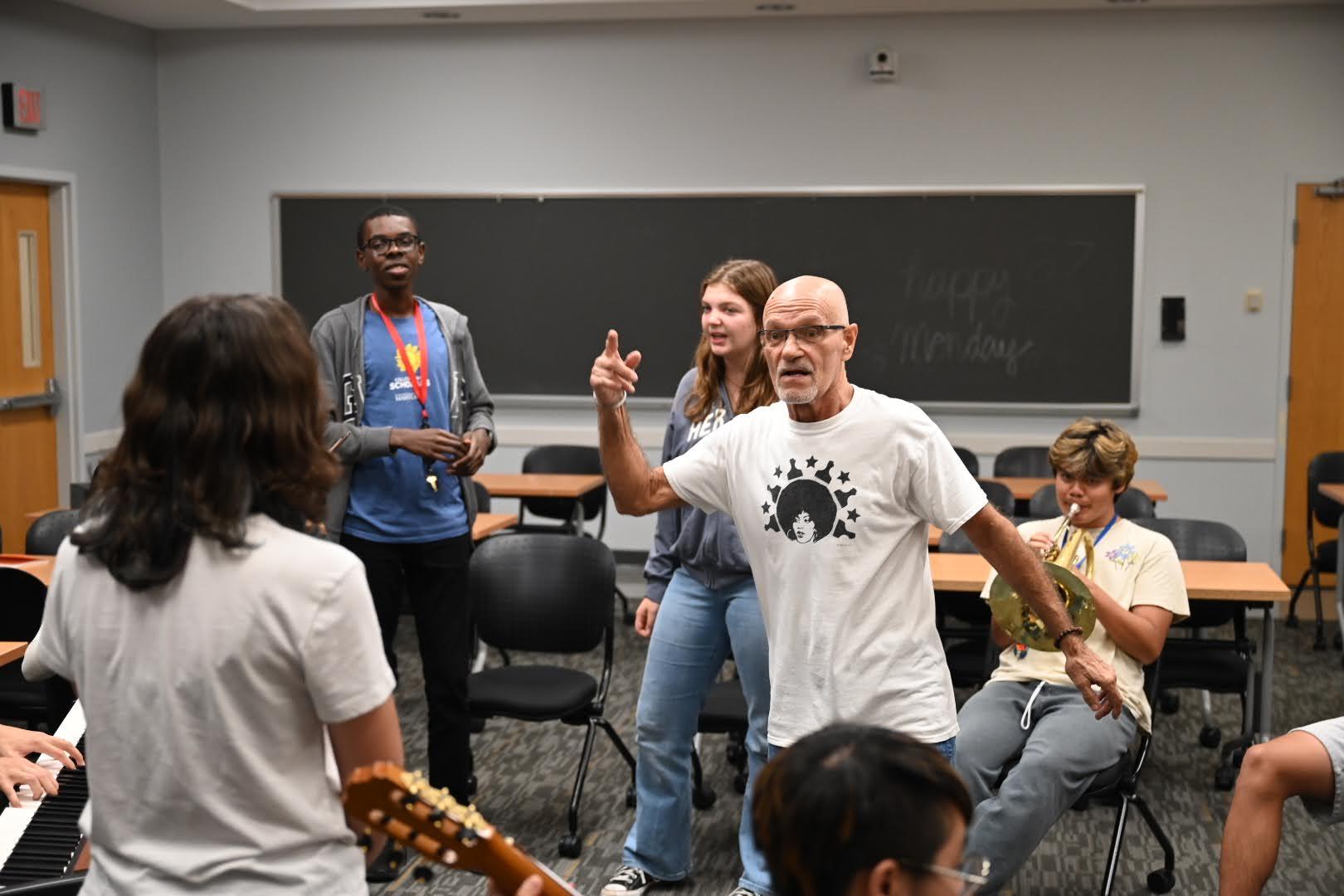
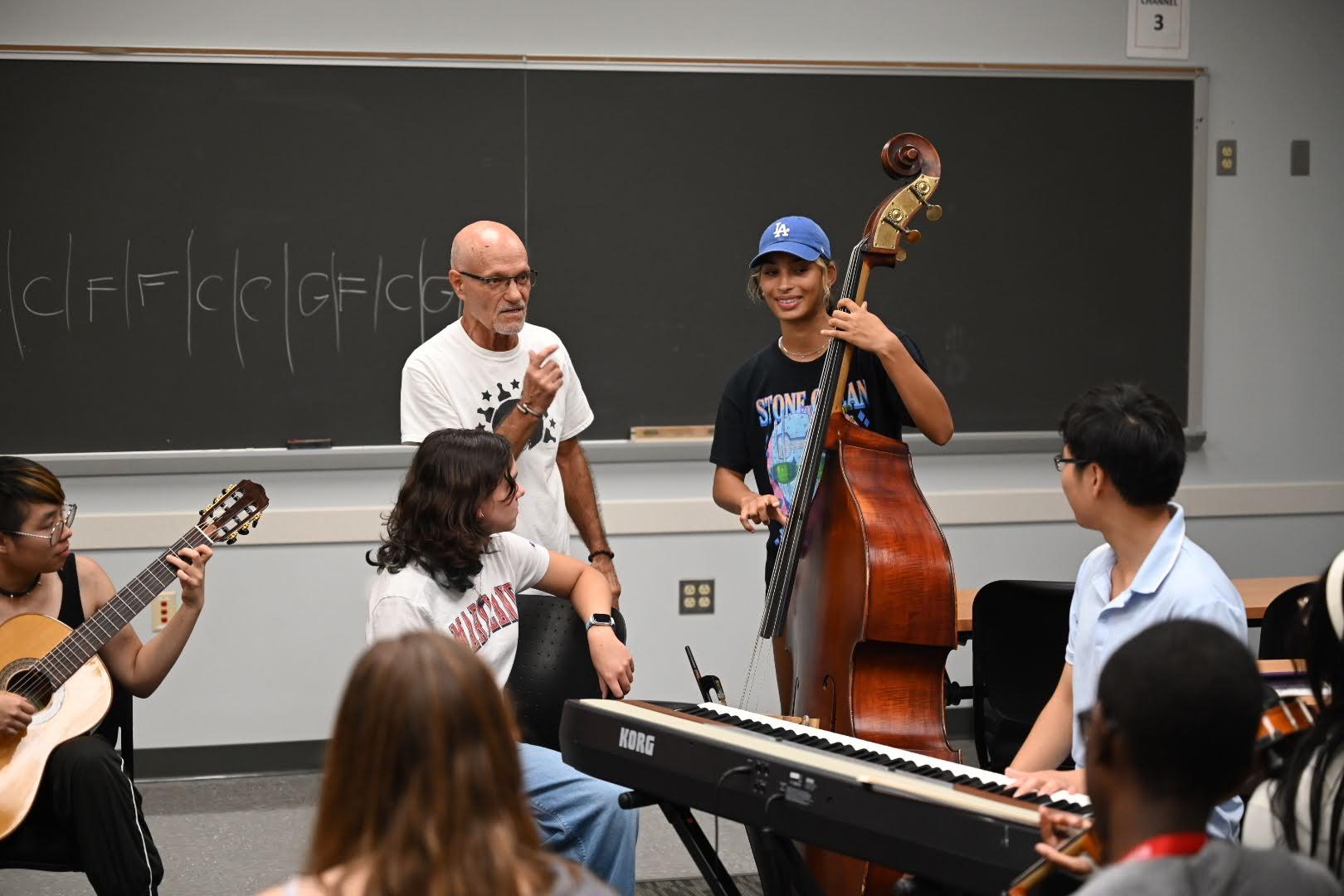
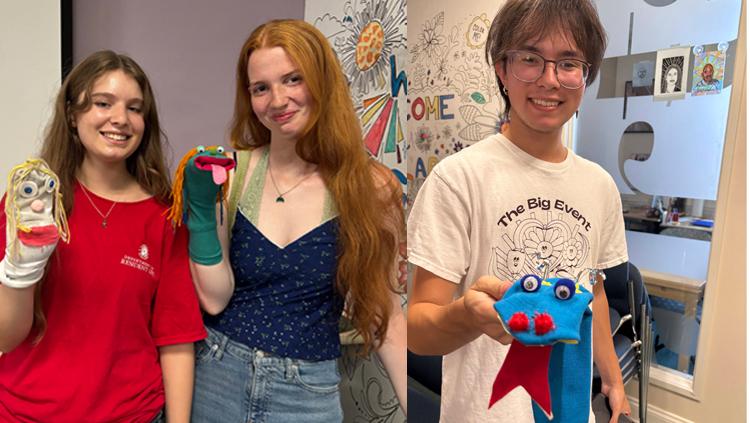
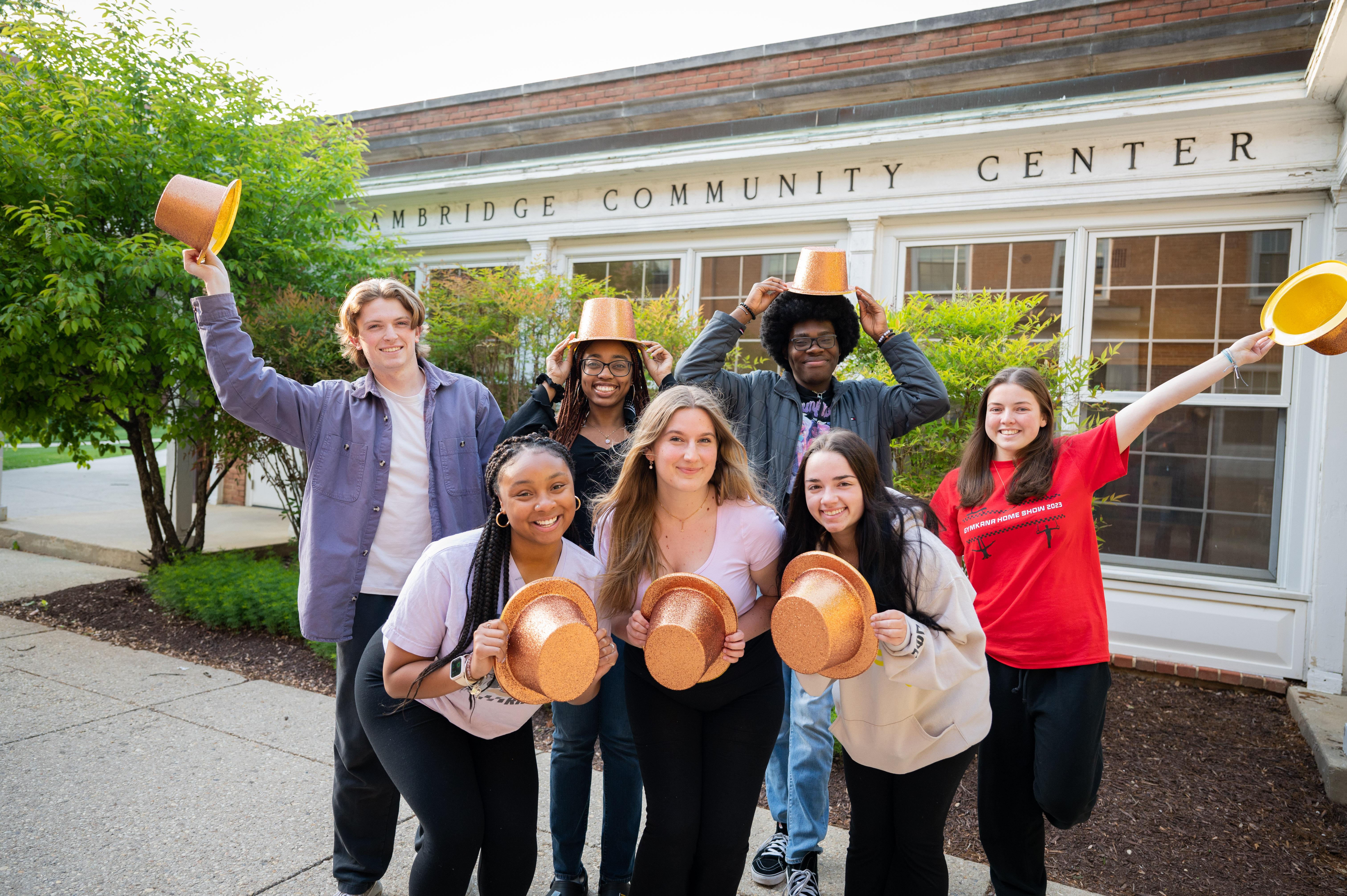

Colloquium and Lecture Topics
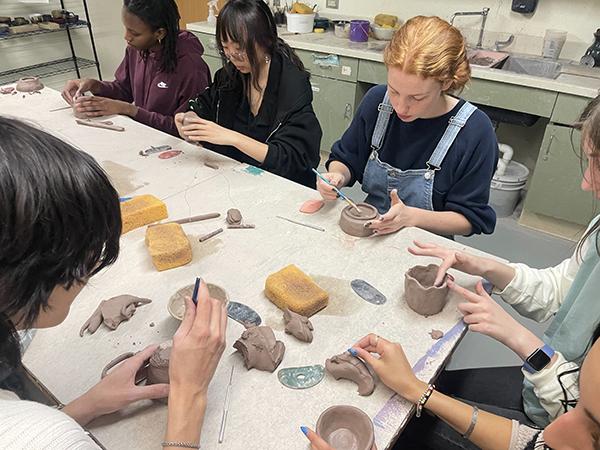
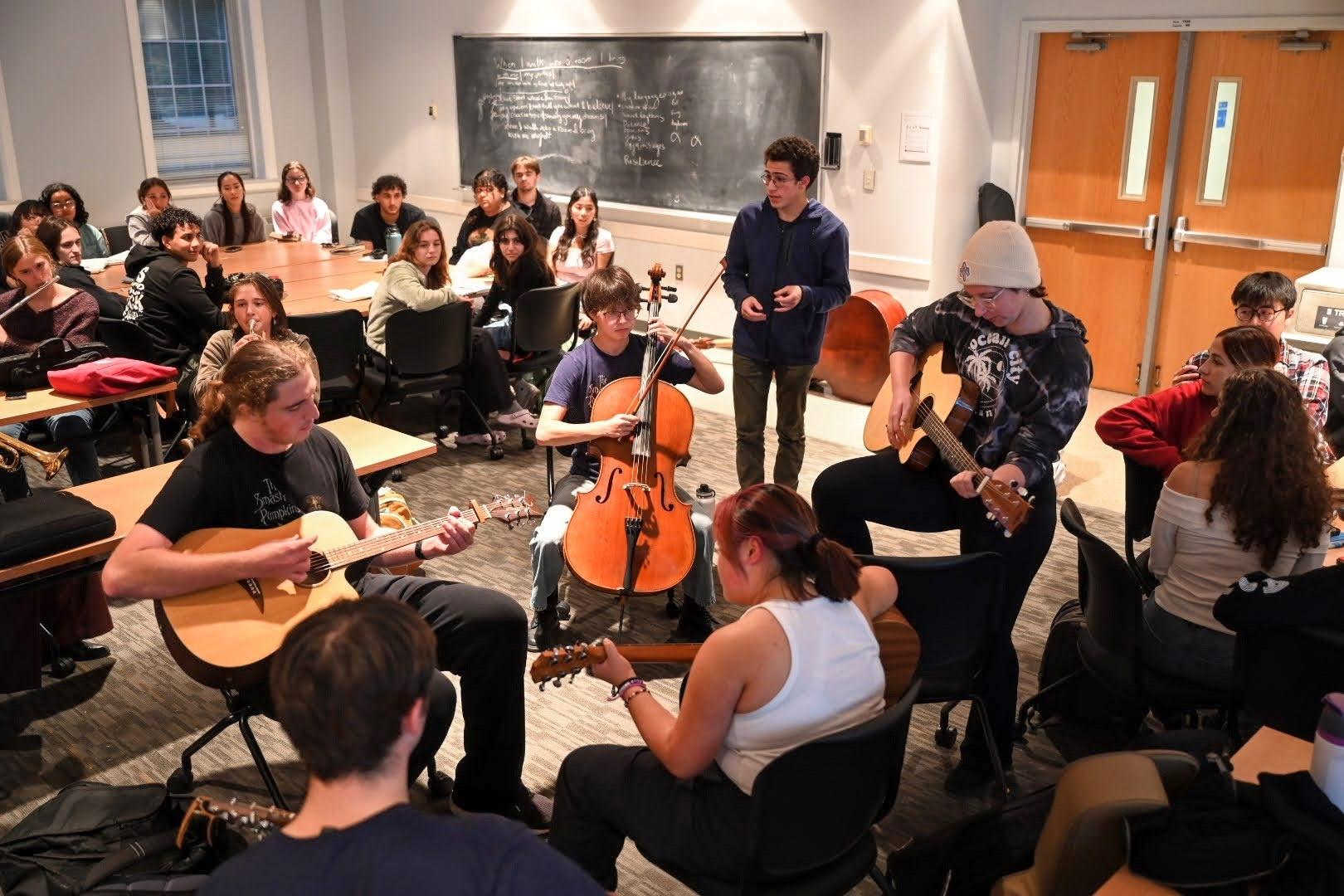
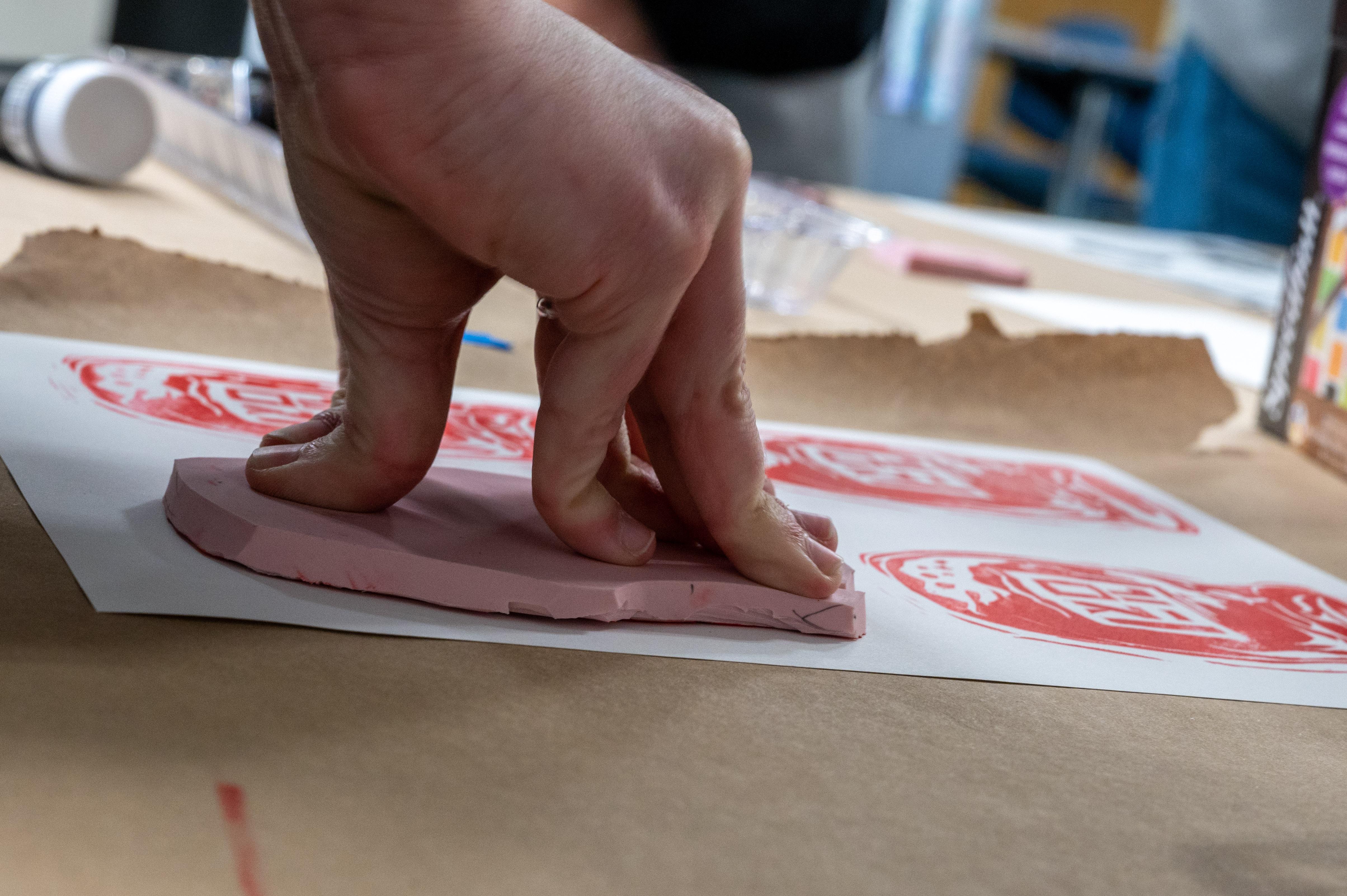
Through a mix of lectures, discussions, and guest artist workshops, and experiential projects, students consider (see our most recent “Year in Review” page for photos!):
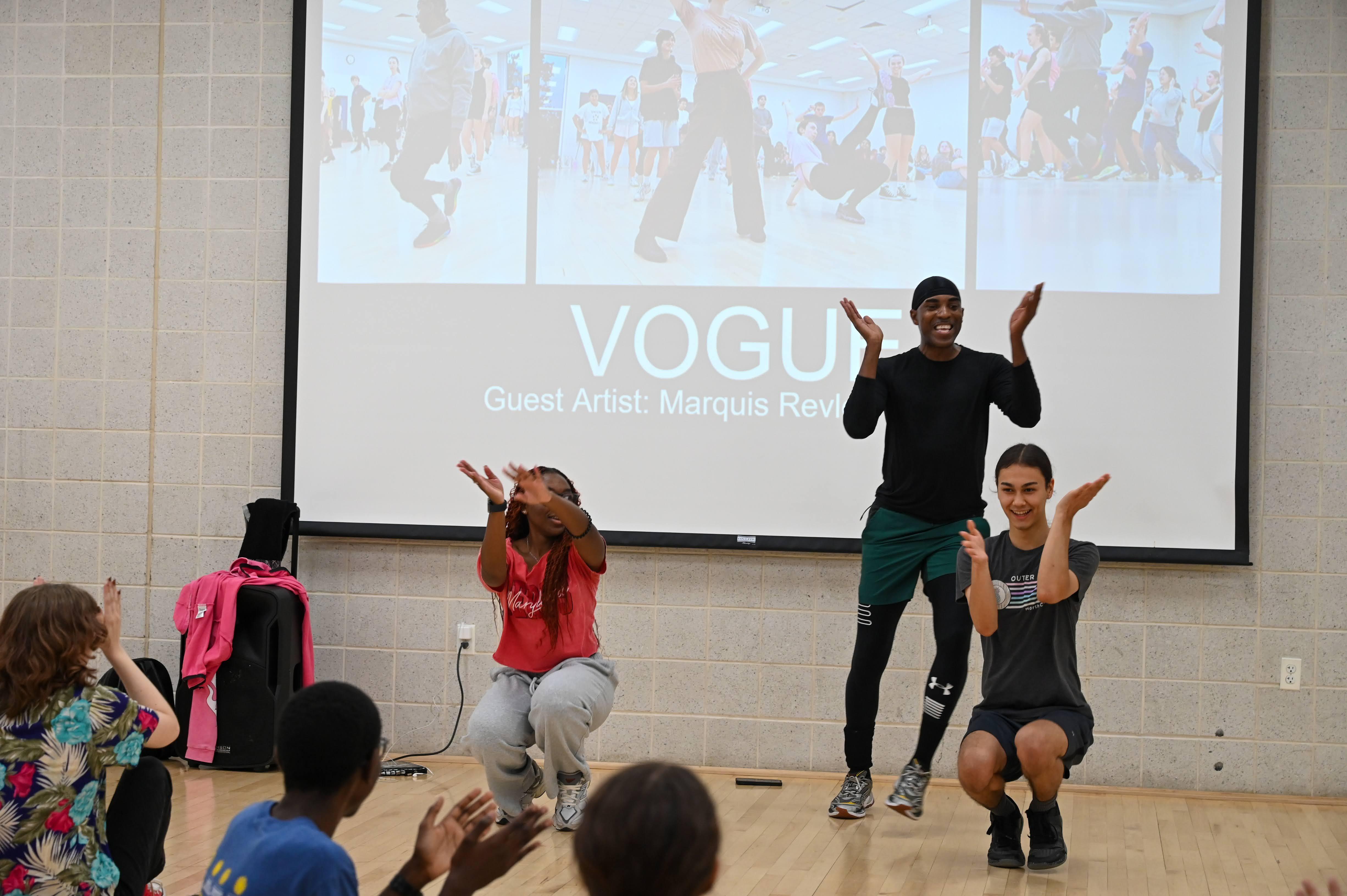
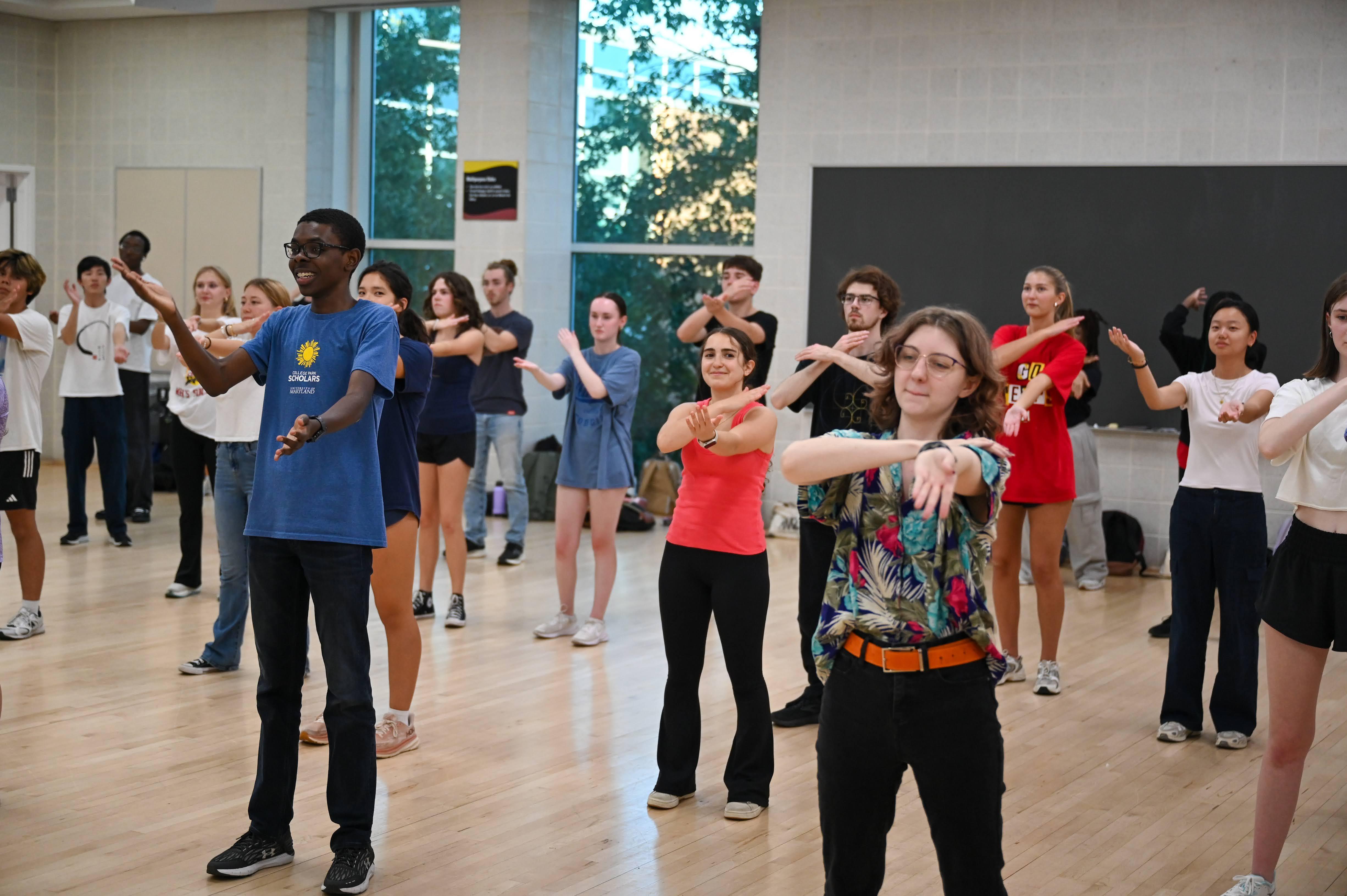
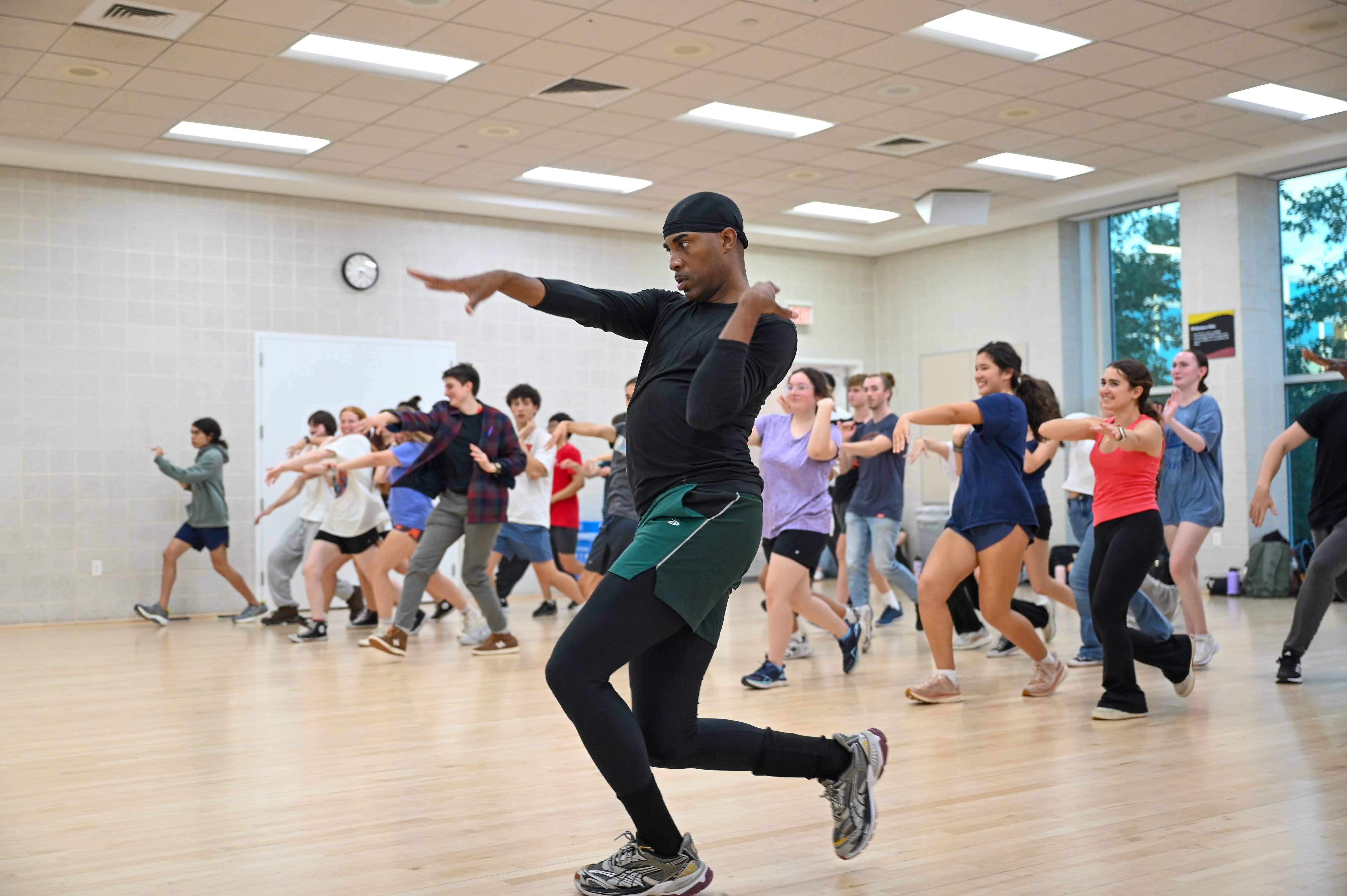
- Vogue Dancing: How can art be used as a tool for resilience, resistance, and social chance?
- Artistic Consumption: How is artistic “taste” shaped by our social identities?
- Creative Research: How can empirical research, rapid iteration, and prototype testing improve your creative process?
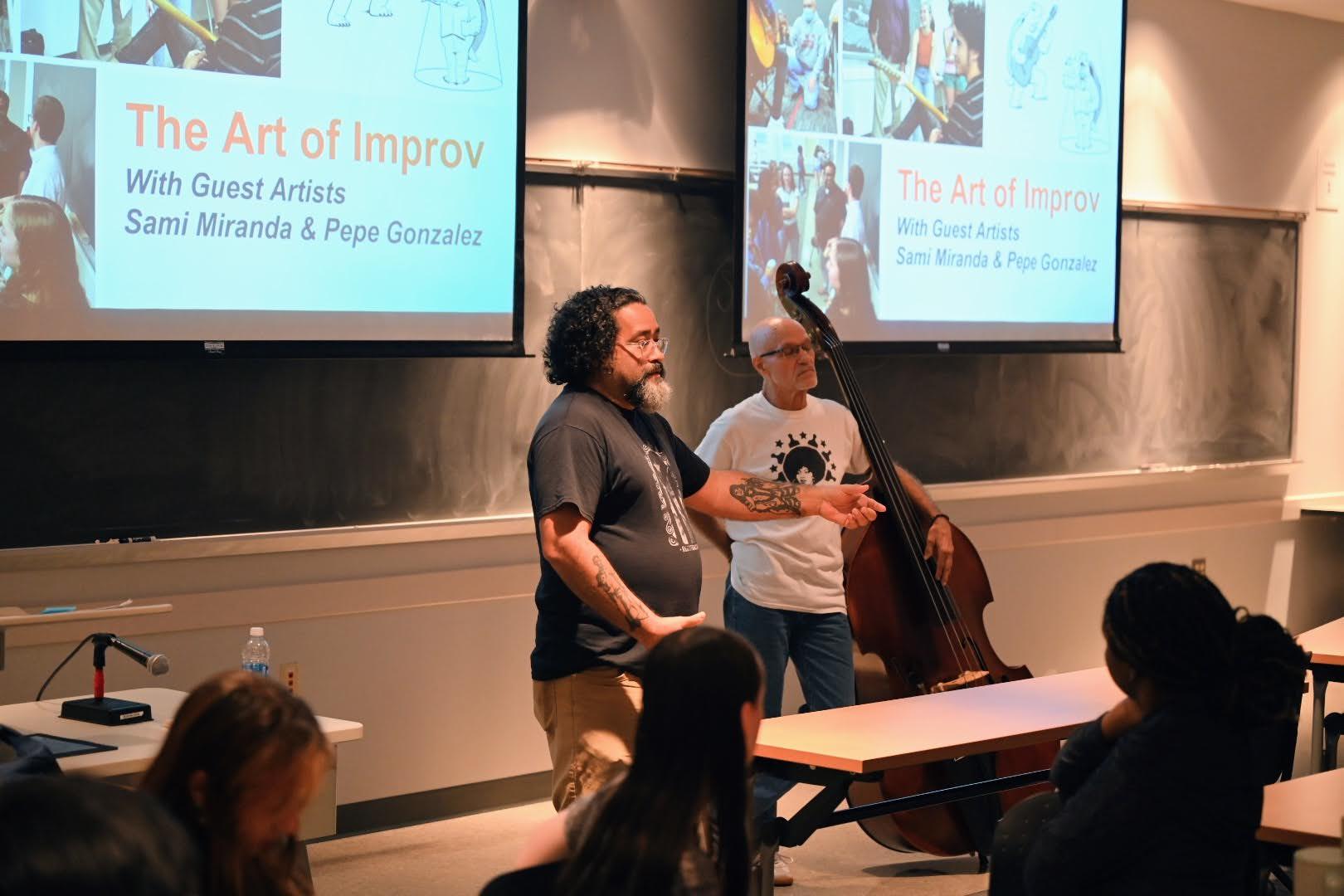
- Spoken Word Improv: How can the principles of improv inform and improve our everyday lives?
- Campus Galleries: How can slow-looking help us combat the pressures of a frenzied world?
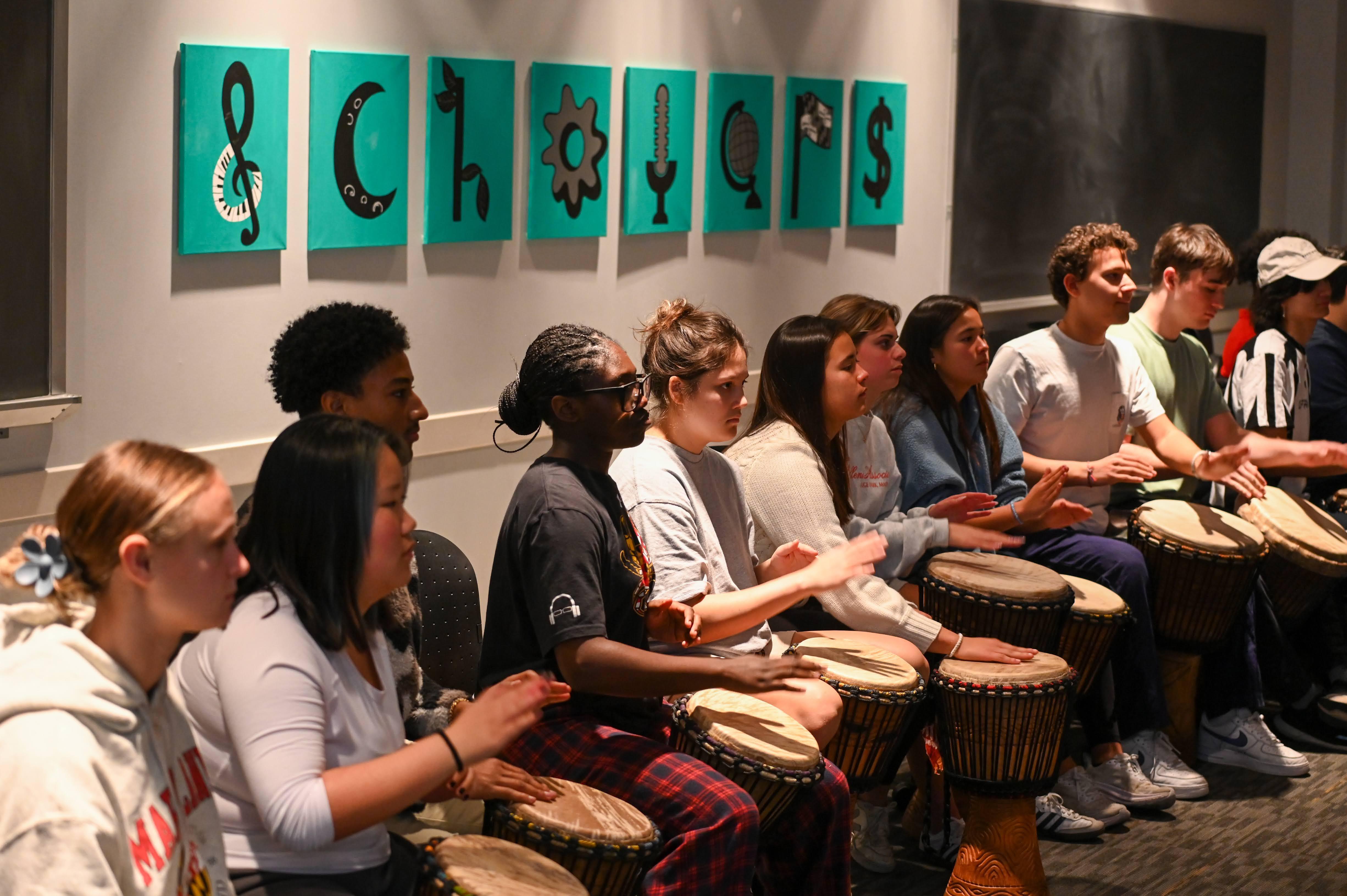
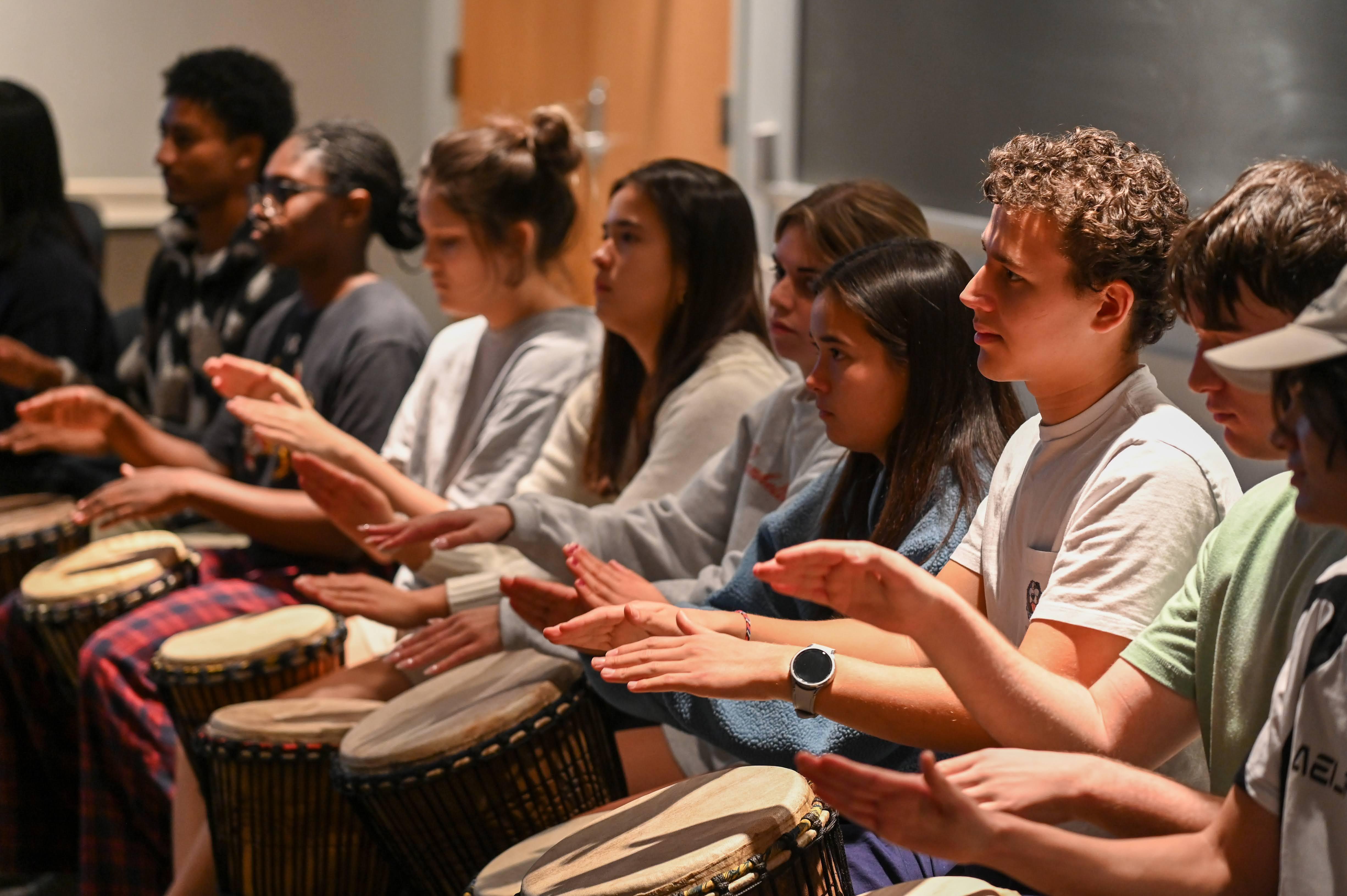
- West African Drumming: How can music build community, tell stories, and promote intercultural understanding?
I have been challenged to think differently, work cooperatively, embrace creativity and, most importantly, go beyond the limits I have set for myself. Because of this program, I can confidently say I feel infinitely more prepared for the “real world,” and for that confidence and growth, I could never be more grateful.
Other Learning Opportunities
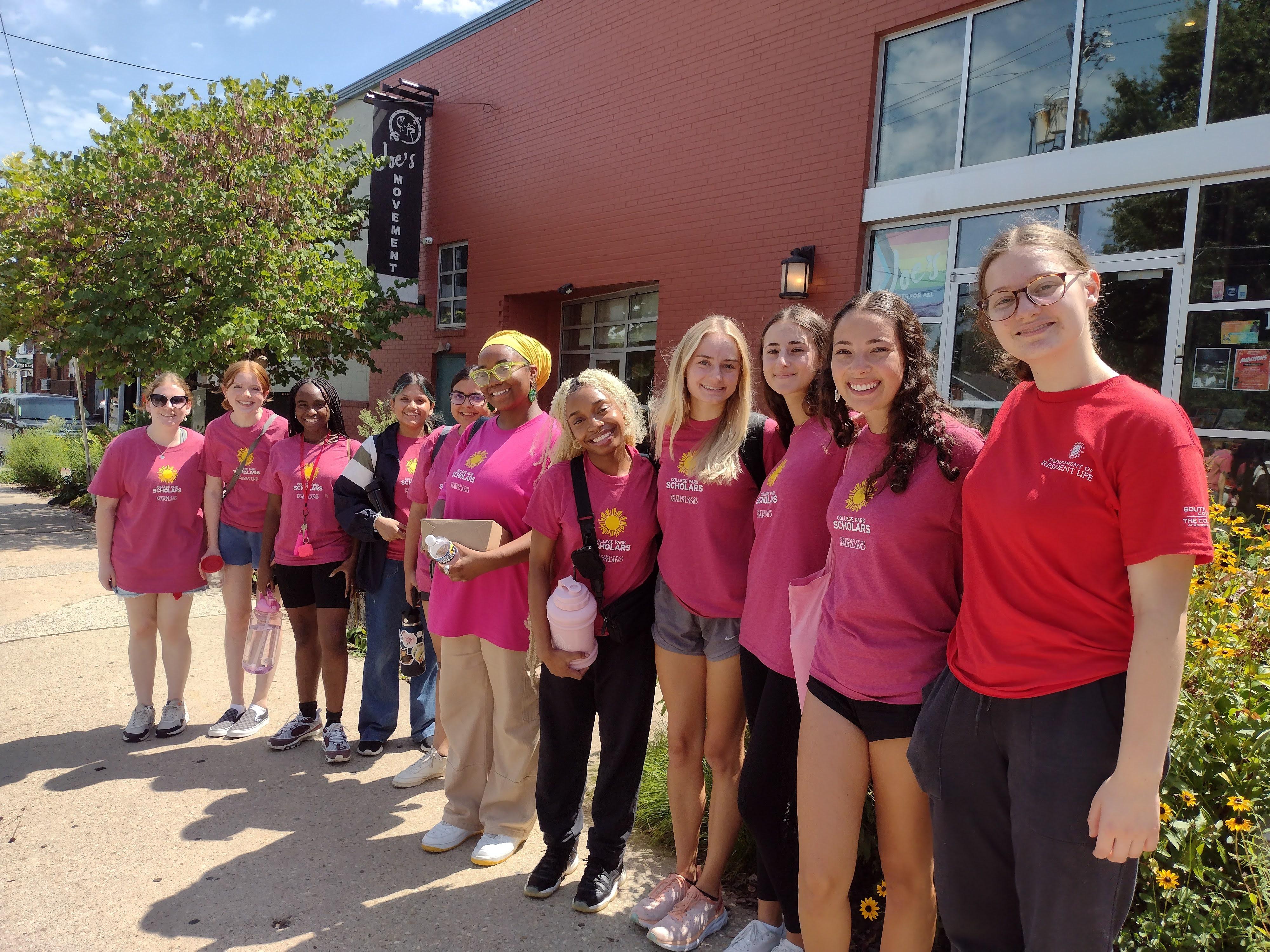
Outside the classroom, Arts Scholars have many other opportunities….
Experience the arts first hand:
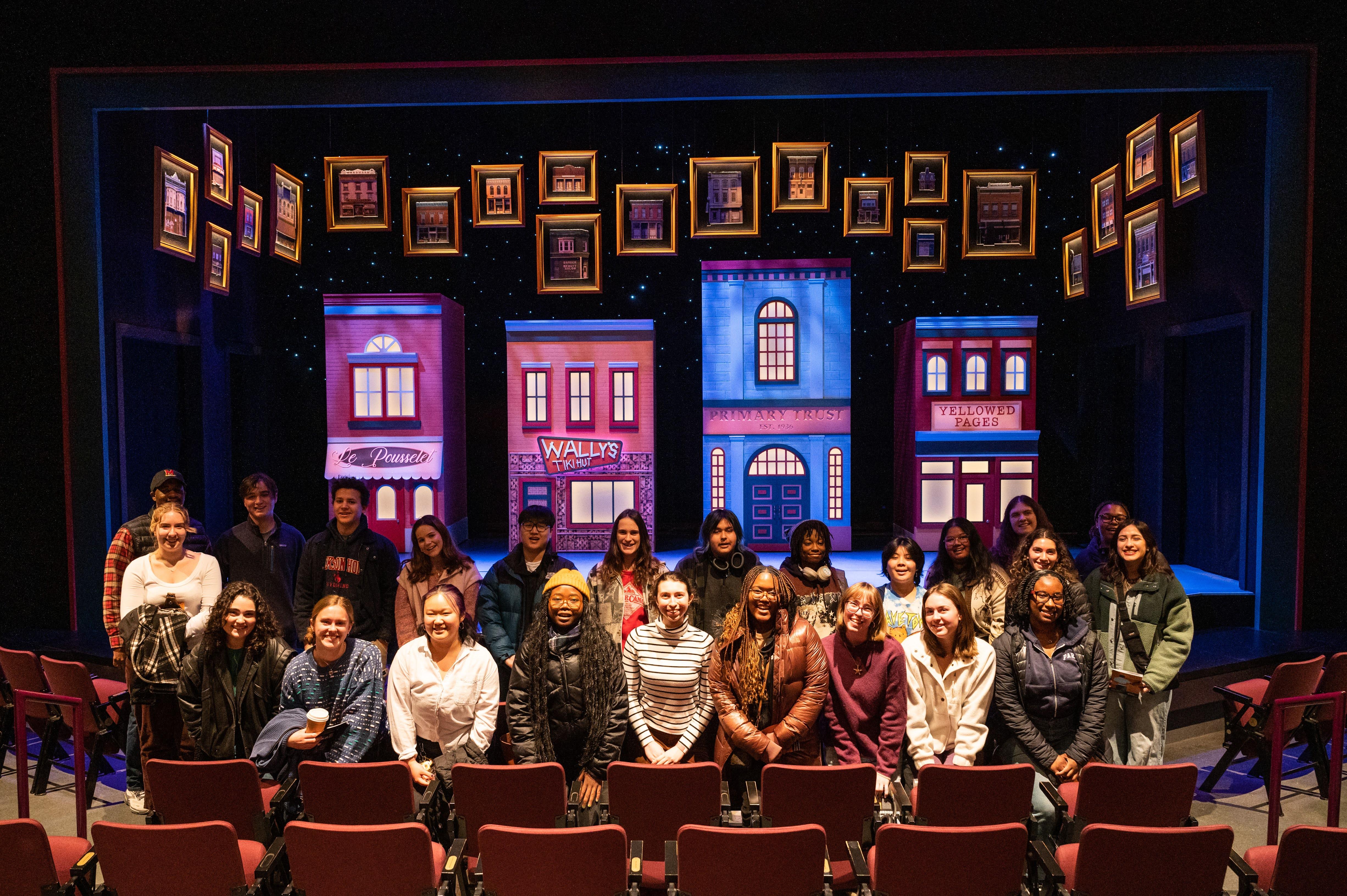
- Field trips: Each semester students visit locations such as The Clarice Performing Arts Center, the Everyman Theatre in Baltimore, the National Gallery of Art, and the National Museum of African American History and Culture.
- Maker Mixer: Teaching Assistant led community building events that include crafting, visiting campus galleries and maker-spaces, and attending shows on campus.
Creative Capstones:
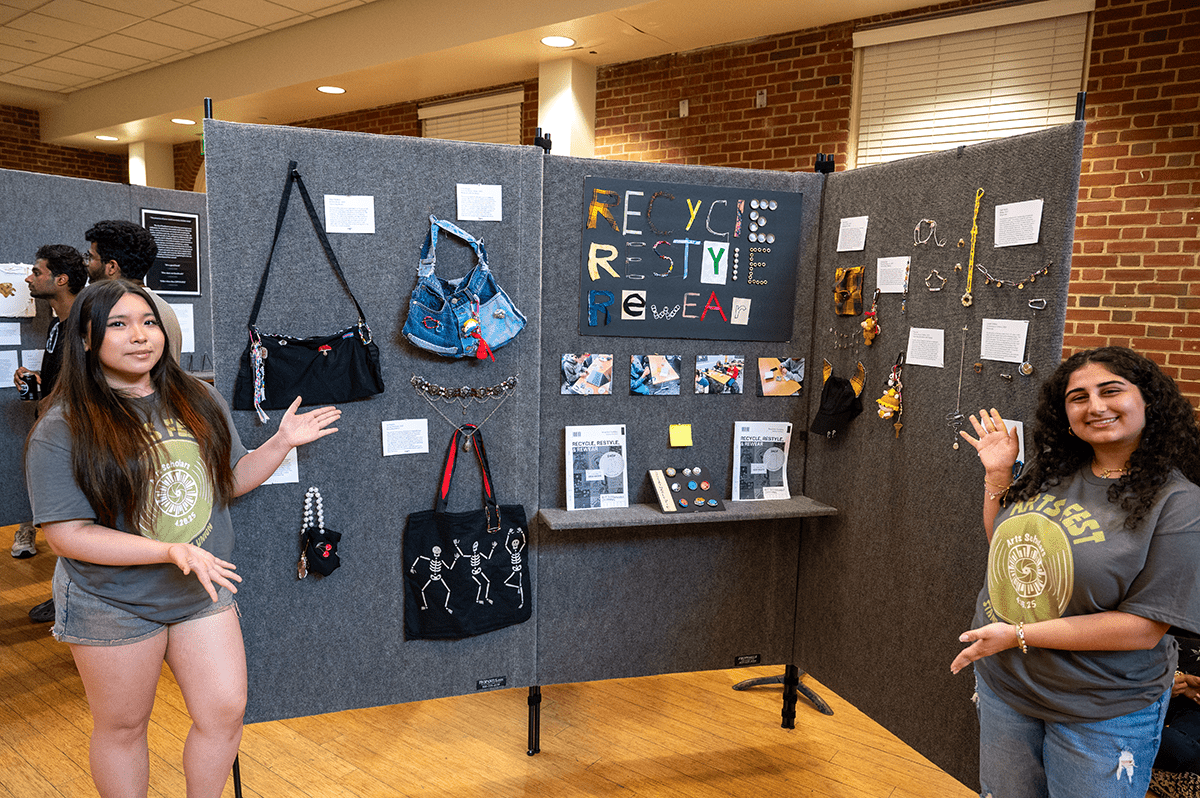
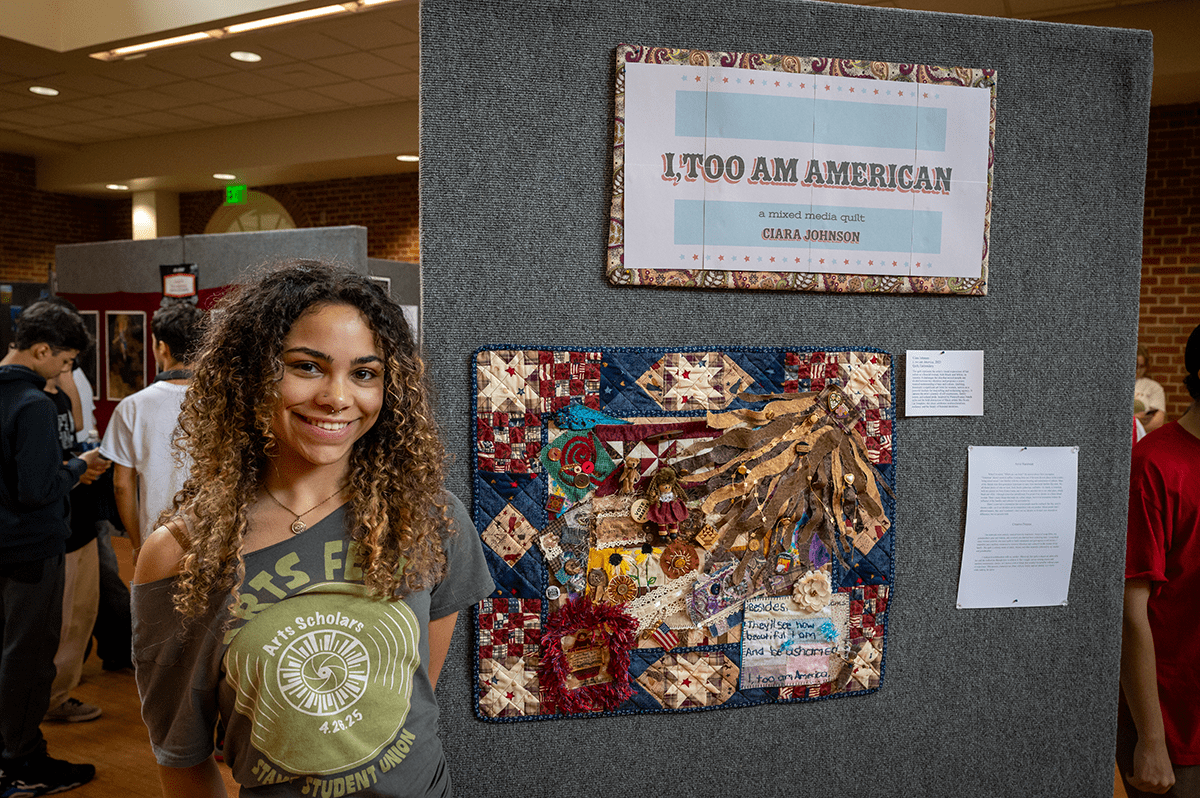
- Sophomores develop capstone projects - identifying a social issue of significance to them to be explored through an artistic medium of their choosing. The capstone project is about your unique view of the world and what you want your audience to understand or experience as a result.
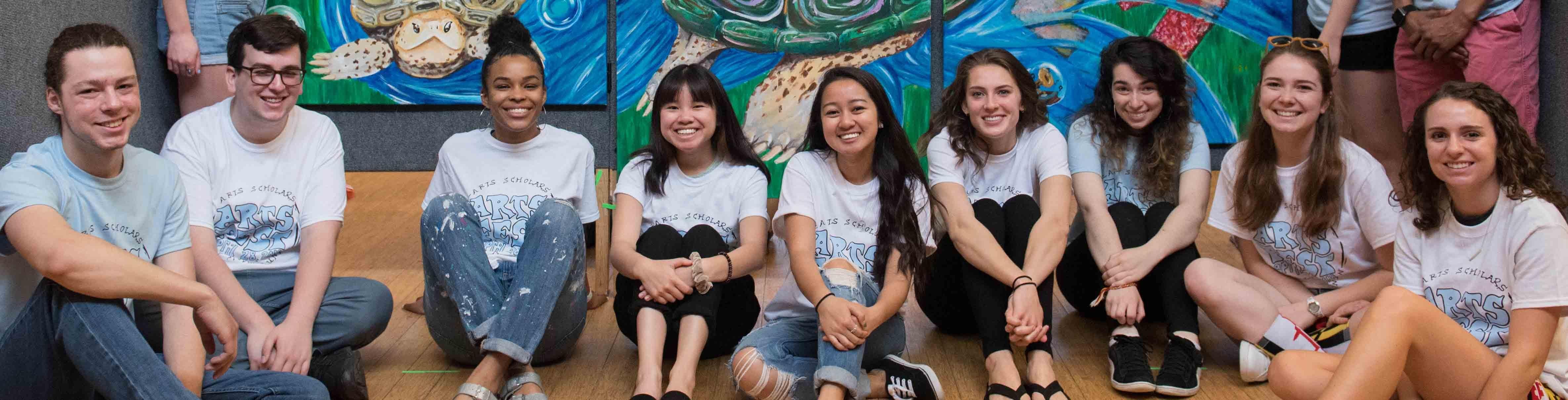
- All capstones are displayed at ArtsFest- an annual exhibition of student work in the Stamp Student Union.
Leadership opportunities:
- Arts Media Team: Social Media & Newsletter assistants work with Arts Faculty to research, draft, and publish the weekly newsletters and Instagram posts to the community.
- Arts Teaching Assistants: Arts Scholars graduates build their skills and experience leading discussions, developing events, and serving as mentors to current students.
Curriculum Overview
Over the two-year program experience (four semesters), students will complete up to 6 credits of supporting courses that will count toward your Arts Scholars citation. In most cases, these will also fulfill General Education requirements. Note that your Scholars courses—colloquiums, capstone practicum and supporting courses—will generally be in addition to any courses you take to satisfy major requirements.
The following represents a typical two-year curriculum, but individual schedules may vary. Details about courses and requirements can be found on the Arts Citation Checklist.
| SEMESTER | COURSE | CREDITS |
|---|---|---|
| Semester 1 | CPSA 100: Colloquium I | 1 credit |
| Semester 2 | CPSA 101: Colloquium II | 1 credit |
| Semester 3 | CPSA 200: Colloquium III | 1 credit |
| Semester 4 | CPSA 201: Colloquium IV | 1 credits |
| CPSA 240: Service Learning; or CPSA 250: Research (DSSP); or CPSA 260: Peer Teaching (DSSP) |
2 credits 2 credits 2 credits |
|
| Semester 1, 2, 3, or 4 | Supporting Course (var. Gen Ed) Supporting Course (var. Gen Ed) Supporting Course (DVUP or DVCC) |
3 credits 3 credits 1-3 credits |
Sponsoring College
Faculty
The Diamondback: UMD students' dance workshop highlights Japanese Butoh style, May 2022
Arts News
Scholars Recognized at 2017 University Awards
Scholars students took home several top awards at the 36th University Student Leadership Awards on Sunday, May 7. University Awards recognized Maryland Medallion Society members and Byrd/Elkins Finalists who have contributed significantly to the general advancement of this university’s interests and displayed outstanding involvement and leadership in campus activities. These students are the university’s top 20 senior students; two Scholars alumni were recognized by the Maryland Medallion Society:
Public Leadership Alum Jazz Lewis Elected to Maryland State Legislature
Jazz Lewis, a 2009 alumnus of Public Leadership Scholars, is currently serving as the second youngest delegate in the Maryland General Assembly. "[Public Leadership] was pivotal to me, I got my first job in politics because of Public Leadership. I interned in the [Prince George’s County] councilman’s office as part of my practicum project," Lewis said. This internship provided him with a "feel for change on the local level," especially in Prince George’s County, where Lewis grew up. Lewis was introduced to this internship opportunity when former Public Leadership Director David Crocker brought in a Prince George’s County council member to speak to their class.
Life Sciences Alum Opens Private Audiology Practice
Dr. Melissa Wikoff, a University of Maryland graduate who earned her Life Sciences Scholars citation in 2004, opened her own audiology practice in Marietta, Georgia. "My experience with Life Sciences Scholars has made a huge impact on my career and who I am today, socially and educationally,” Wikoff said. “Life Sciences gave me the foundation for my love of science, anatomy, and how hearing works." According to their website, Peachtree Hearing “uses the latest technology, scientifically proven techniques, and compassionate personalized care” to treat their patients. Wikoff specializes in the diagnosis and treatment of dizziness, which is typically due to disorders of the inner ear.
ETE Bids Farewell to Spirited Director
After spending six years building up the Environment, Technology and Economy Scholars program as director, Becky Archer will be moving across the Atlantic Ocean to Belgium. "I loved every day working with students who wanted to find innovative ways to make our way of life more just and sustainable. The students pushed me to research fields that I had minimal background in, finding new and creative ways to look for opportunity,” Archer said. "The faculty and staff of Scholars are some of the most caring, intelligent folks that I have ever known, and it was an honor to work with people who were willing to step outside their comfort zone all for the purpose of making the student experience more meaningful."