Arts
Examining the role of The Arts as a catalyst for healing, transformation and action

Introduction
The practice of Art—in its infinite forms, functions and implications—is the most accessible and universal way of constructing meaning out of the world we inhabit.
Our Philosophy: The Arts are not just for experts. They are not solely for the enjoyment of the elite. They are not a superfluous extravagance. The Arts are for us all, expert and novice alike. They are not just an end in and of themselves, but a means. They shape, and are shaped by the world we inhabit.
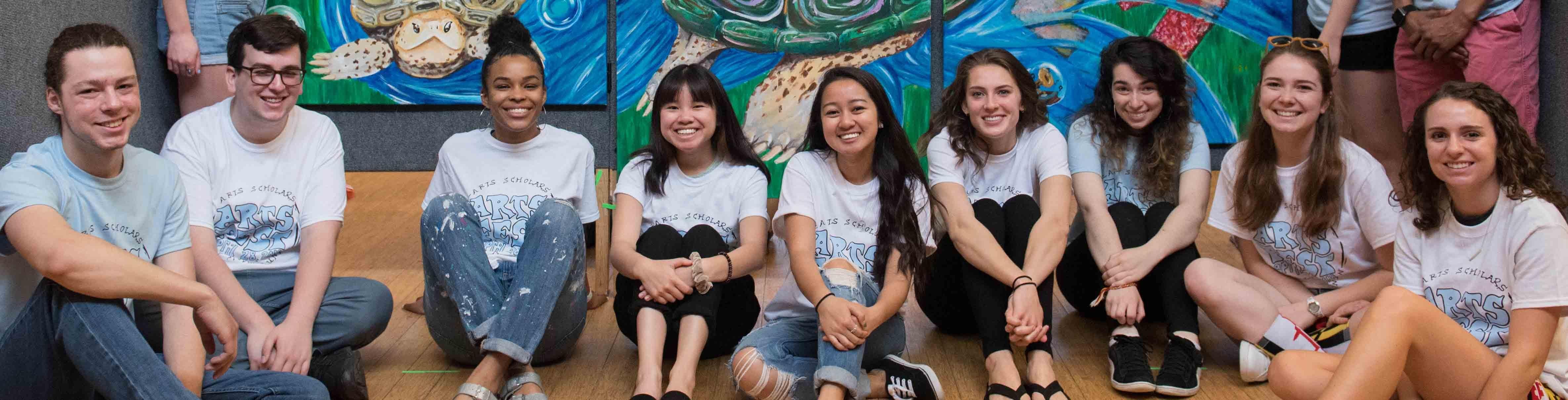
Students in the Arts Scholars program gain a deeper understanding of the impact of art as a means to explore society and culture against the backdrop of our individual differences and shared experiences.
What you can expect: No matter your major, area of artistic interest, or skill level, as a member of our community, you will be challenged to strengthen your personal artistic skill set, experiment with new and different art forms, and gain a deeper understanding of the value of the arts in our personal and collective lives. We will investigate the power of the arts to:
- Communicate difficult concepts
- Advocate for social change
- Investigate the human experience
- Explore our own identities
- Develop our capacities as creative problem solvers and critical thinkers
- Reinforce, but also upend, existing systems of inequality and oppression
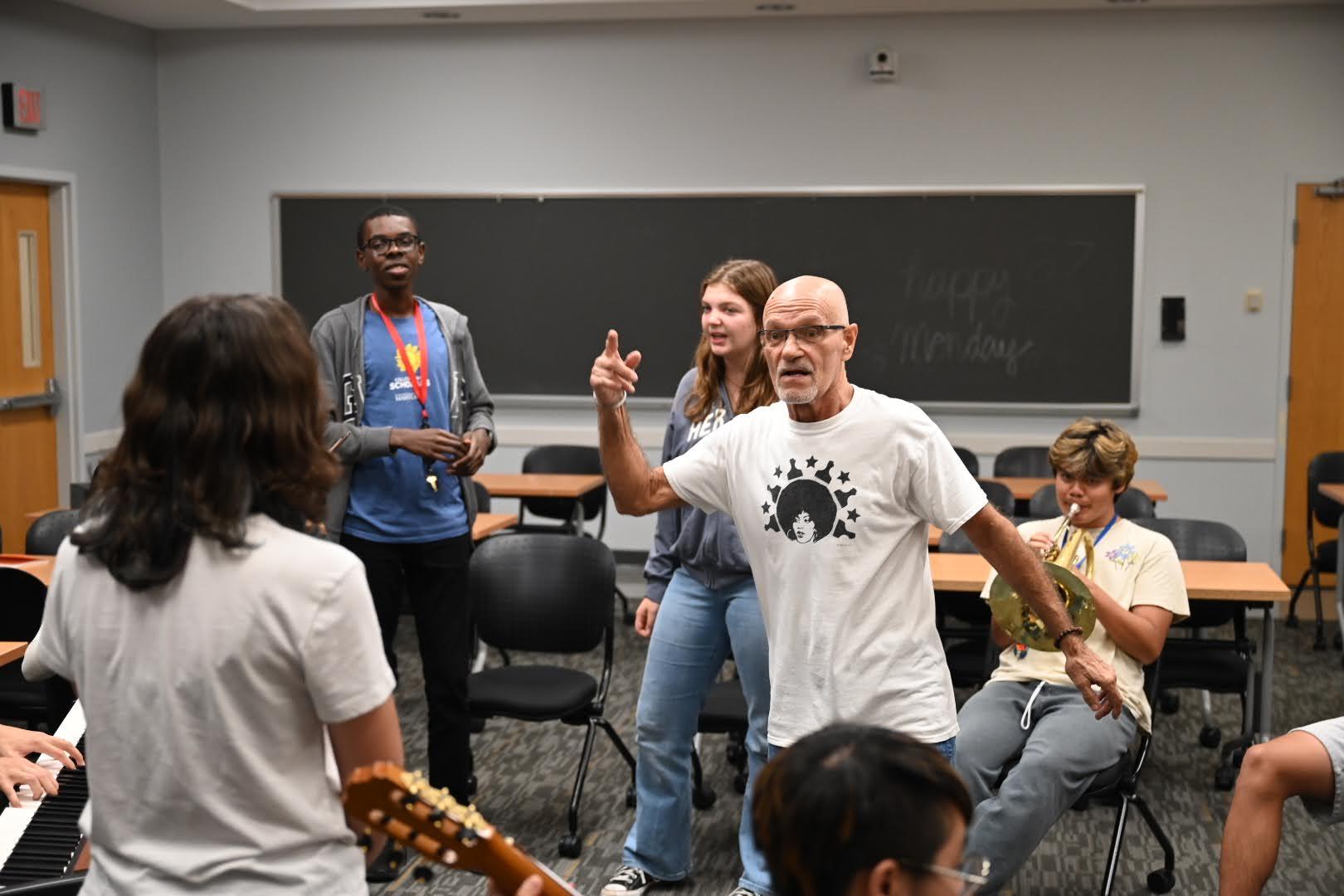
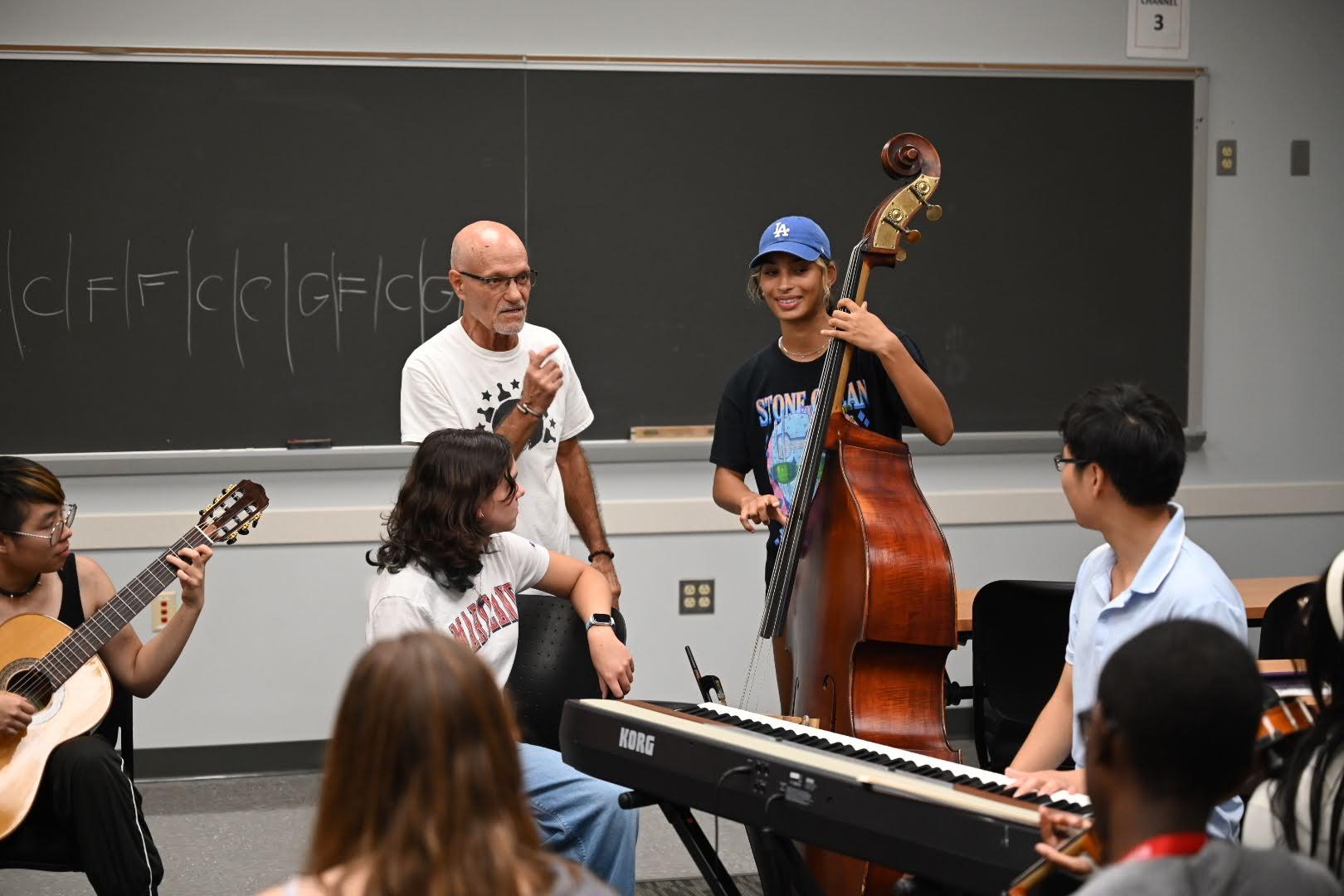
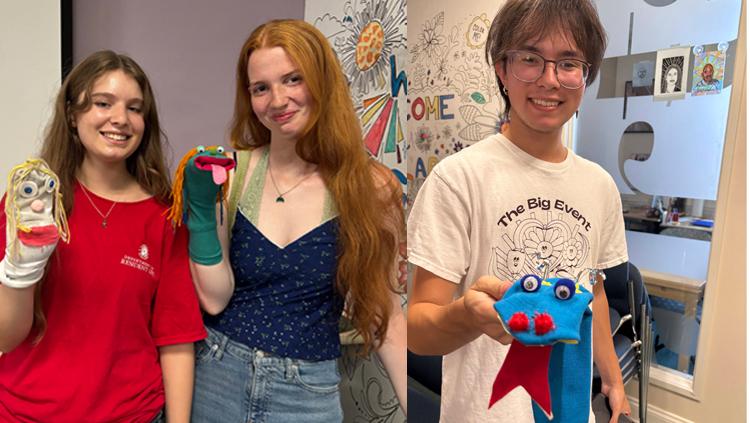
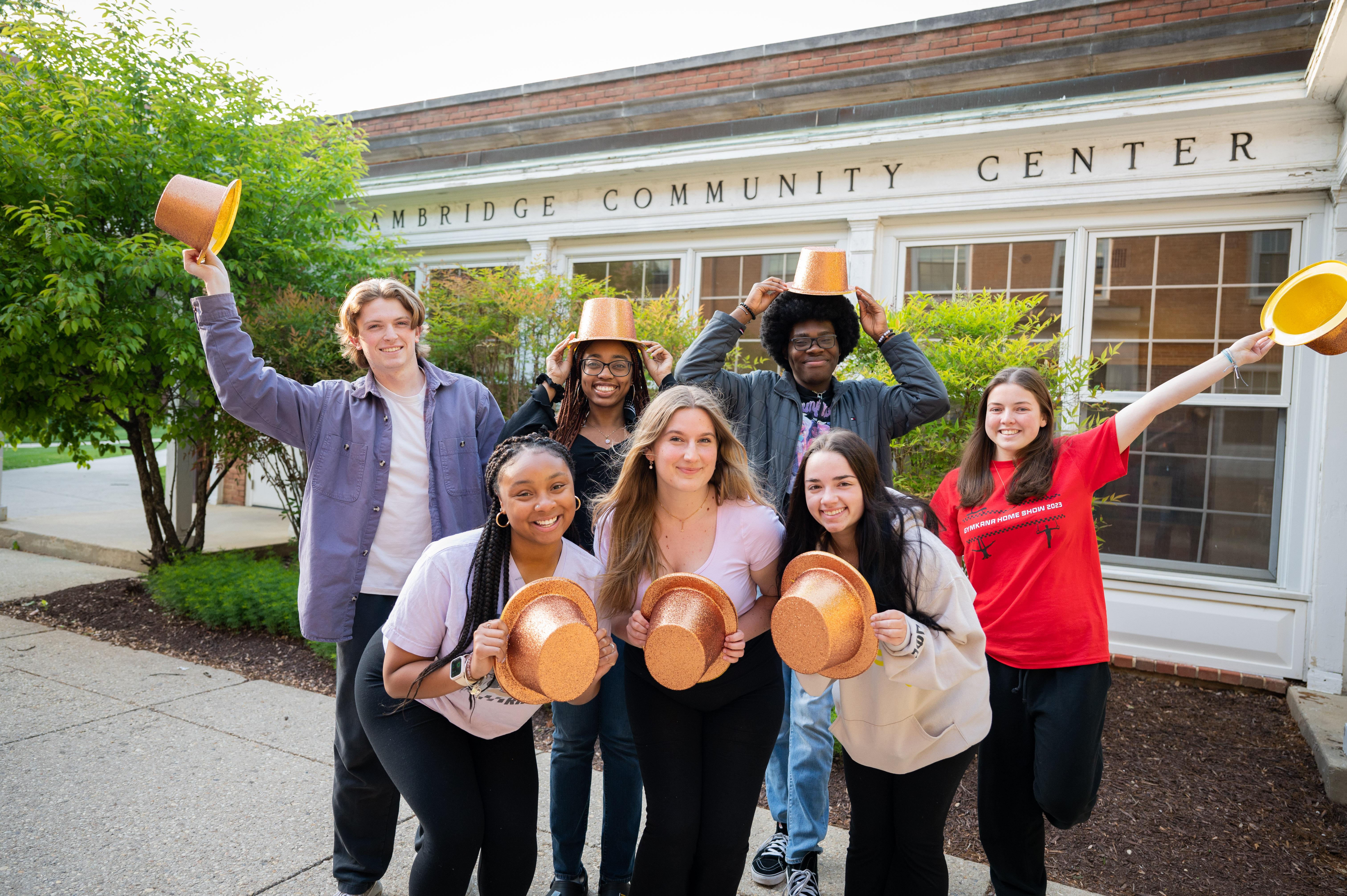
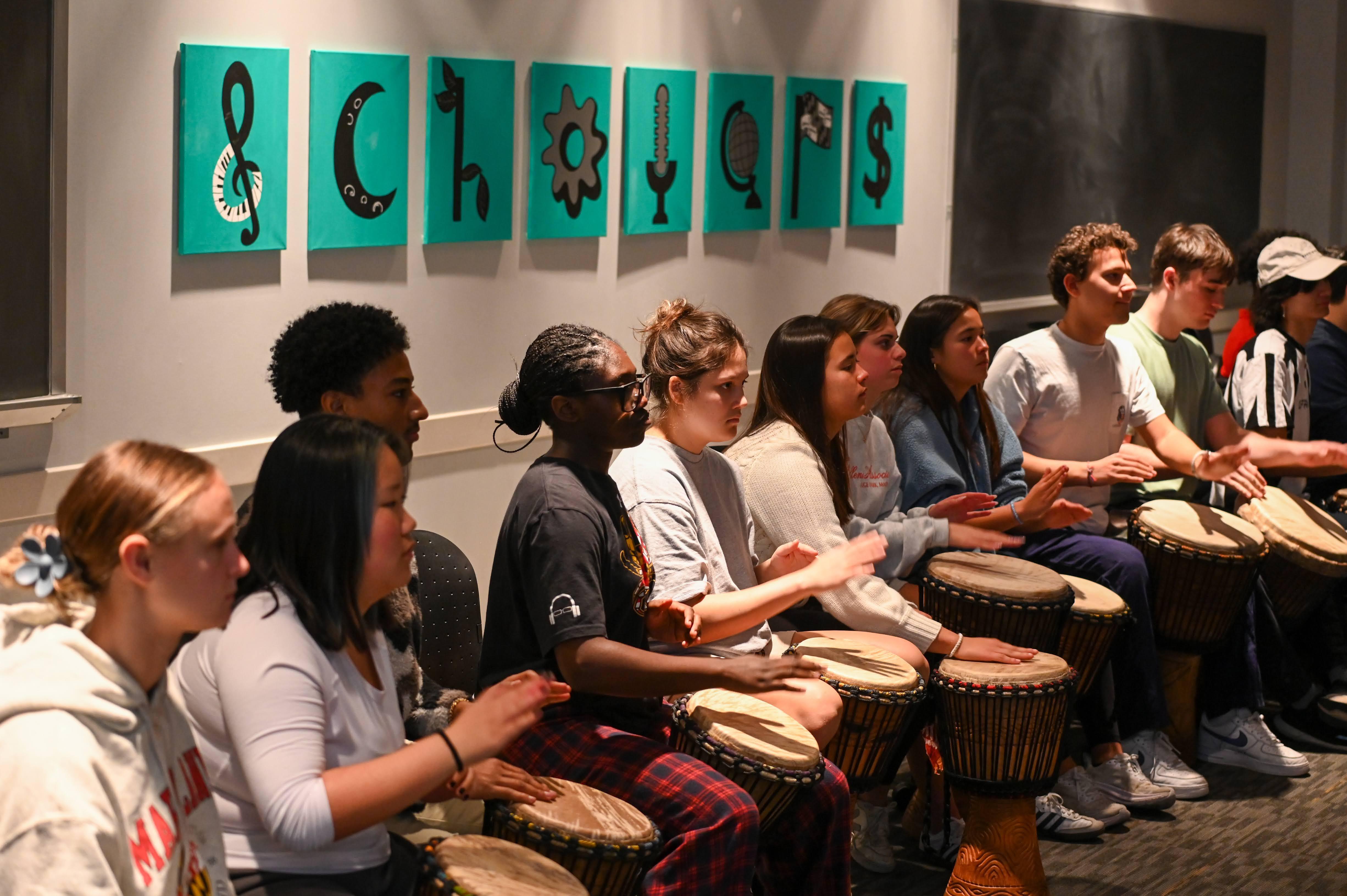
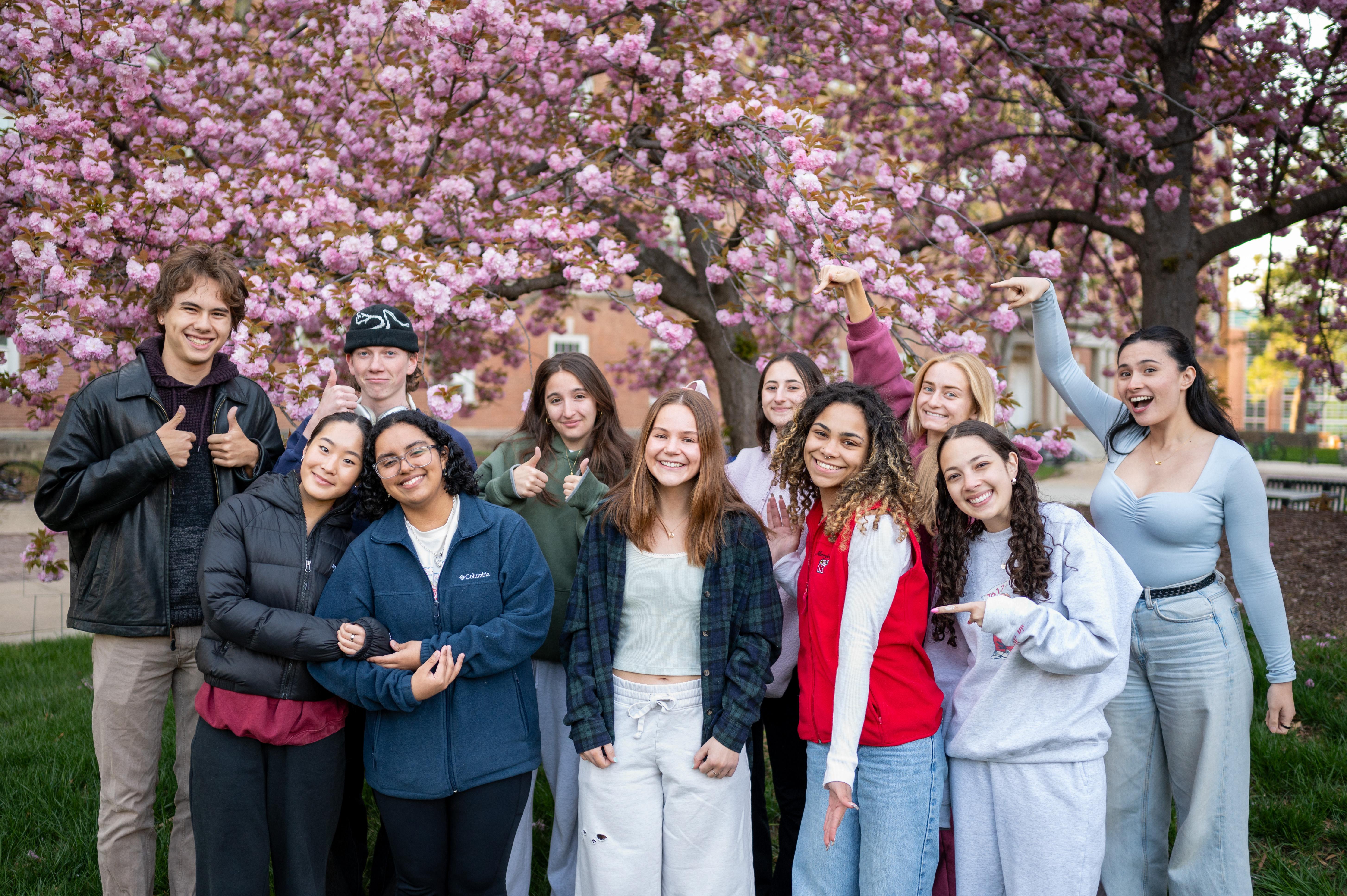
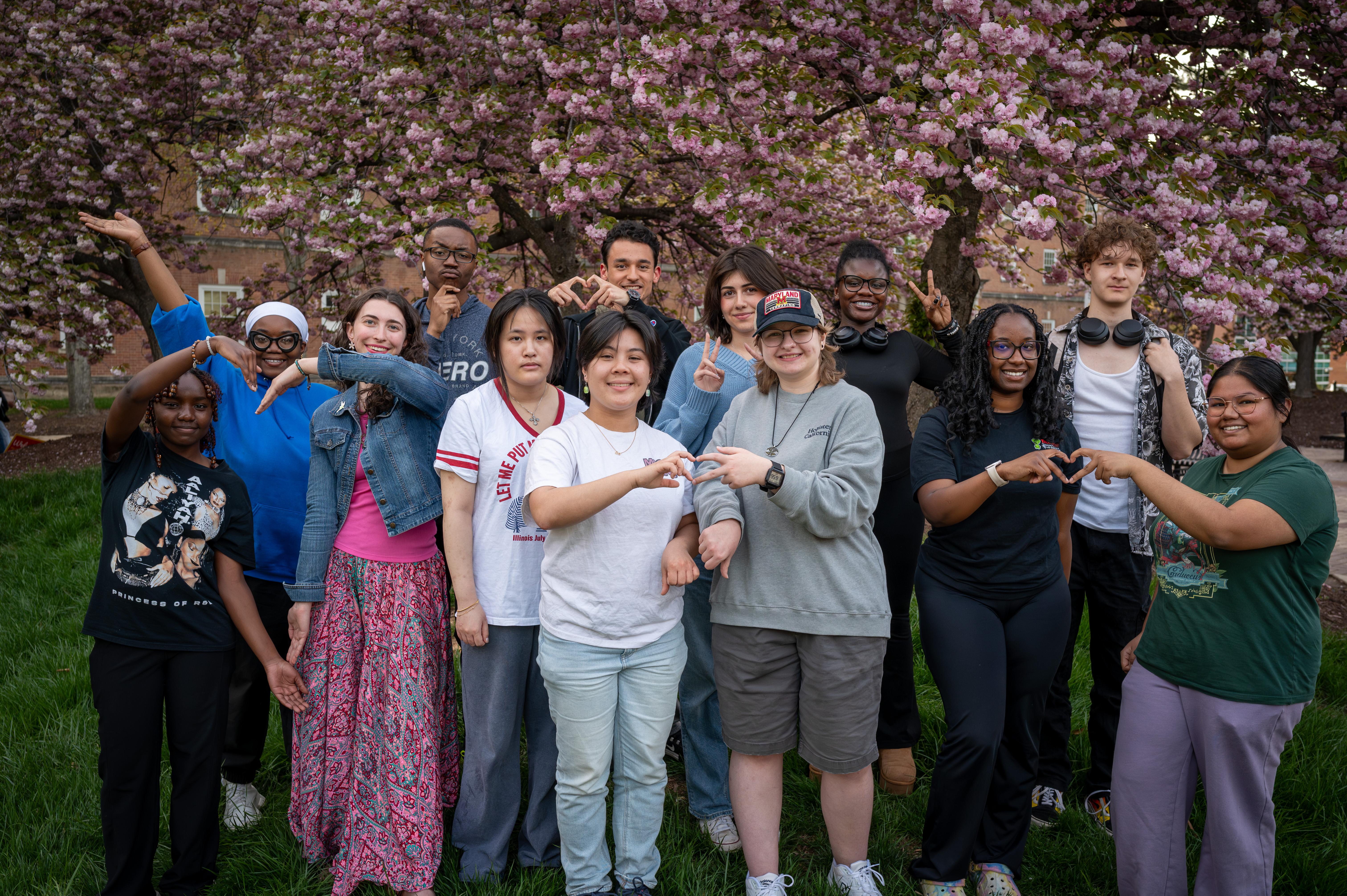
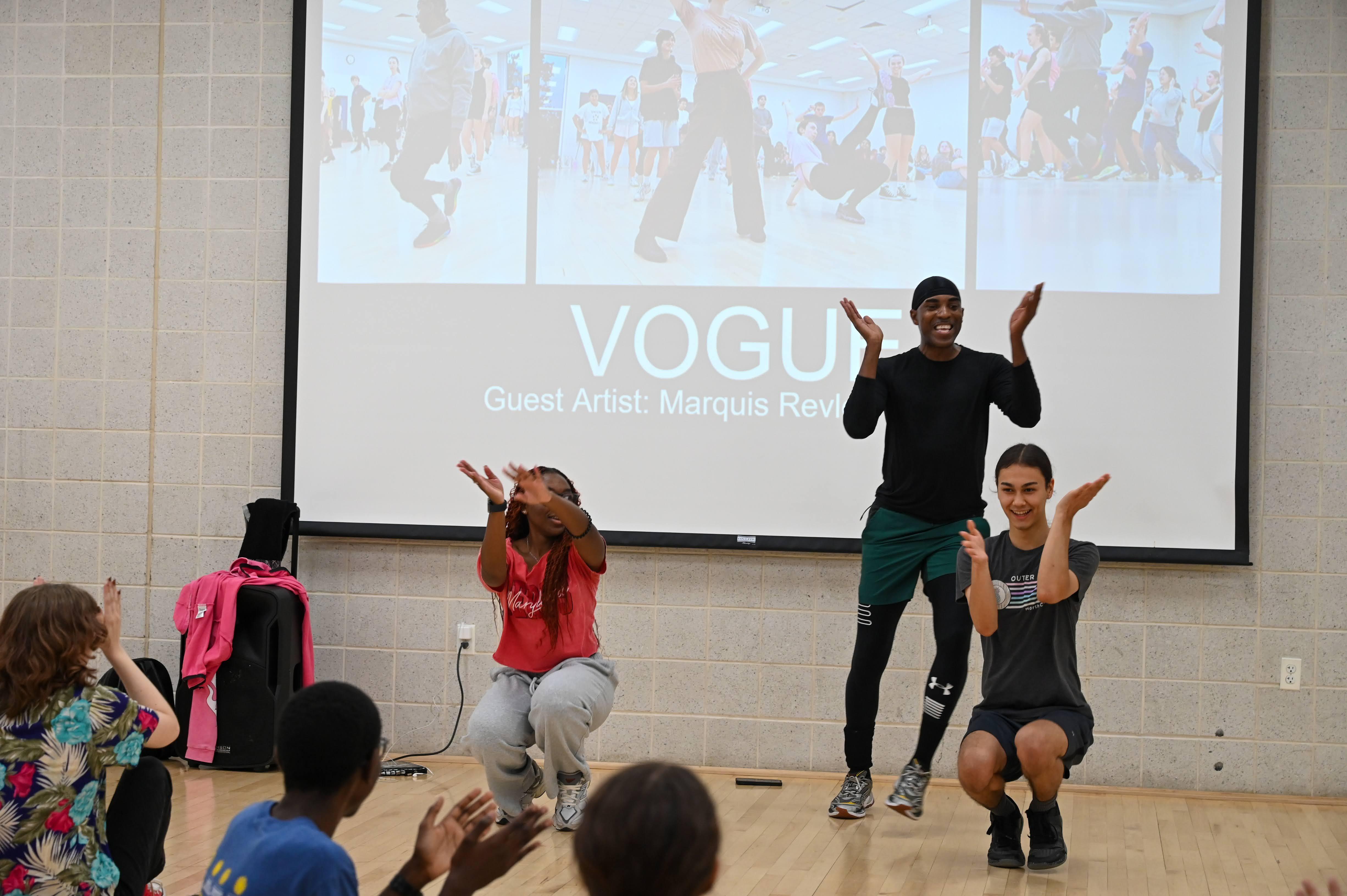
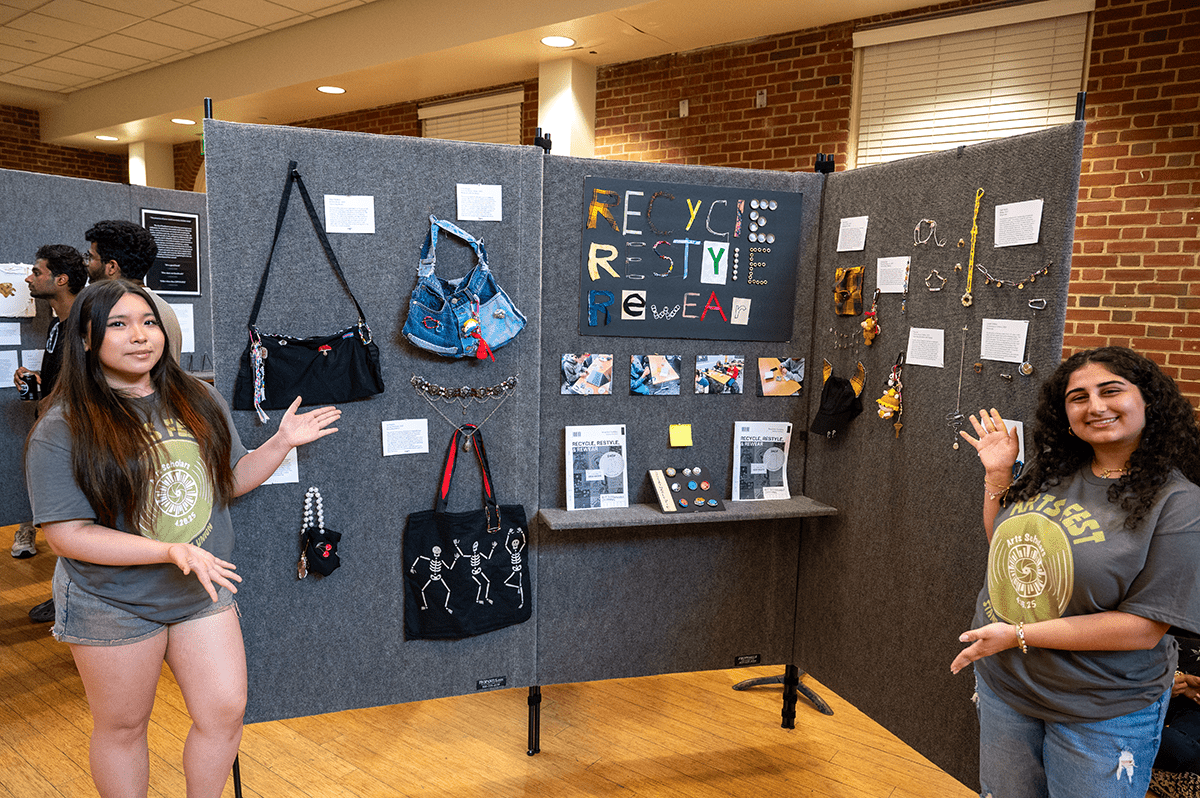
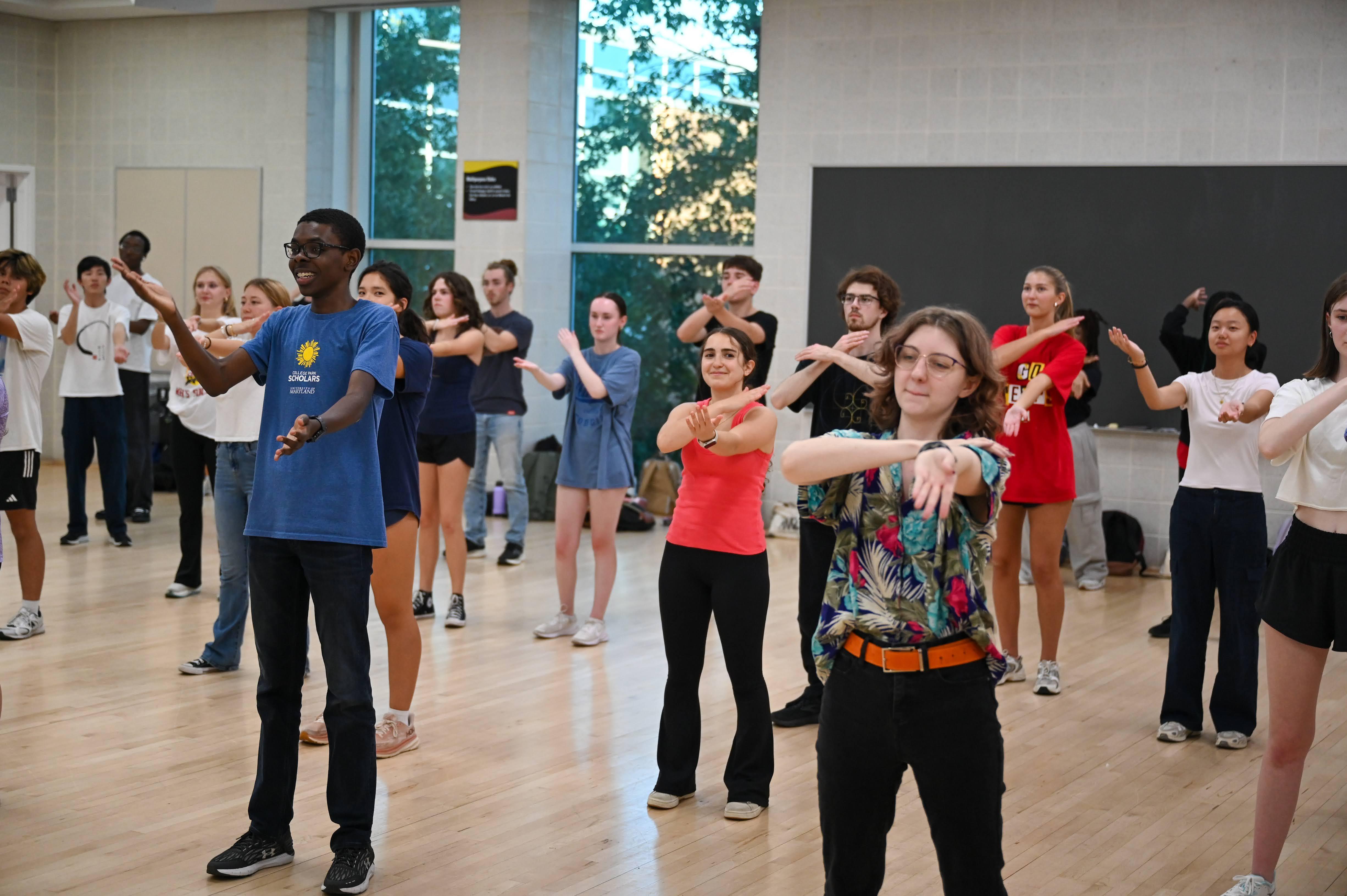
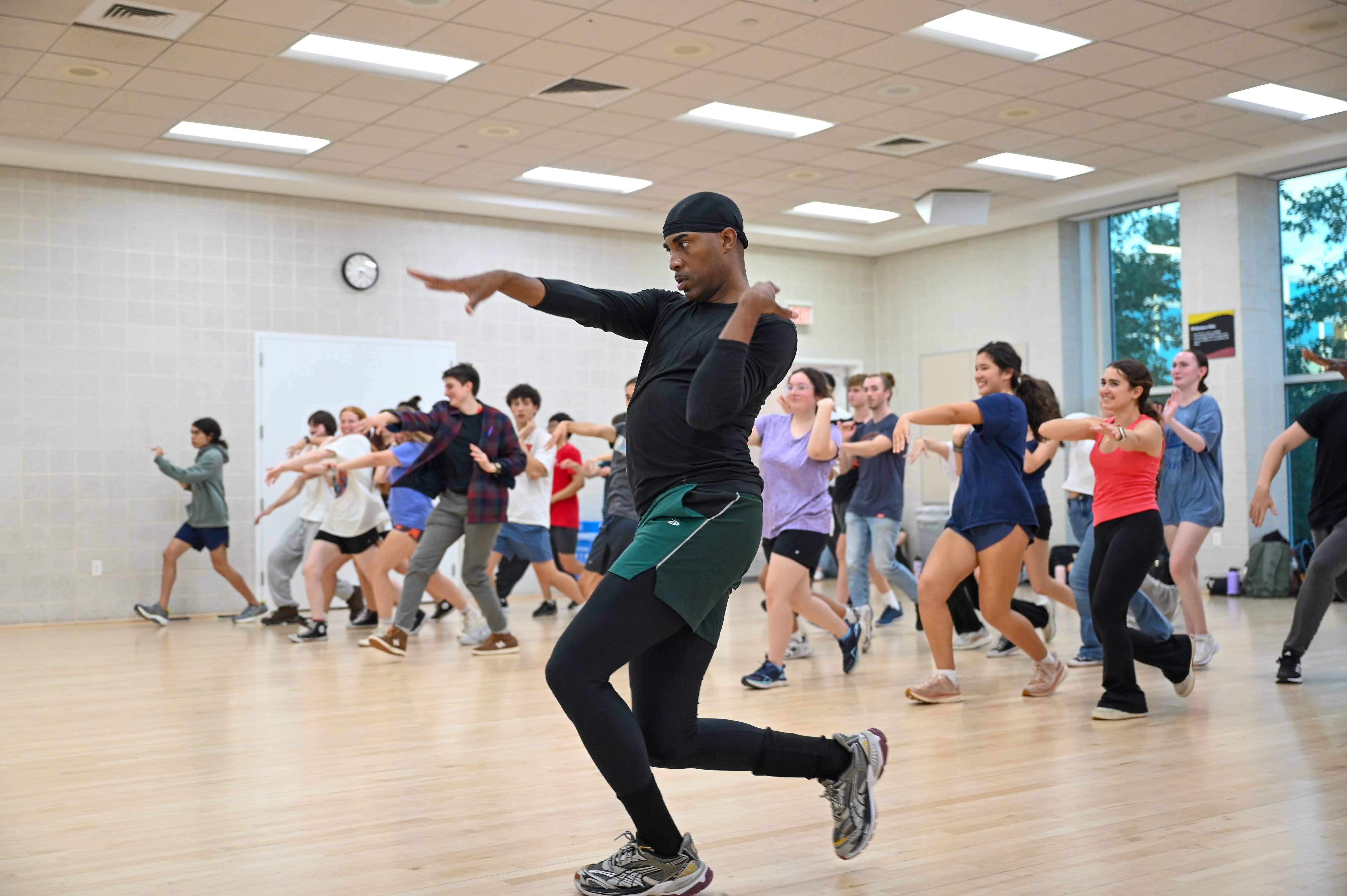

Colloquium and Lecture Topics
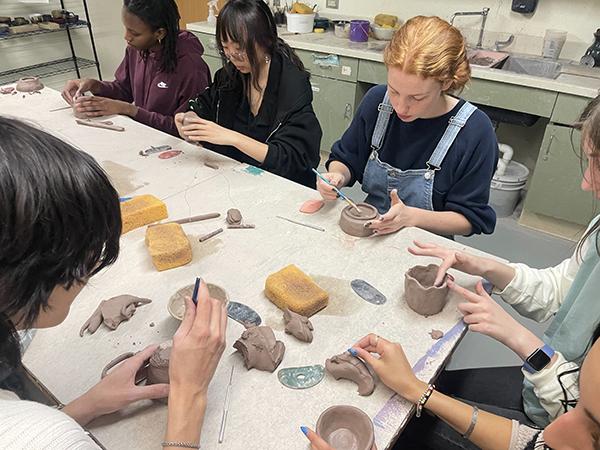
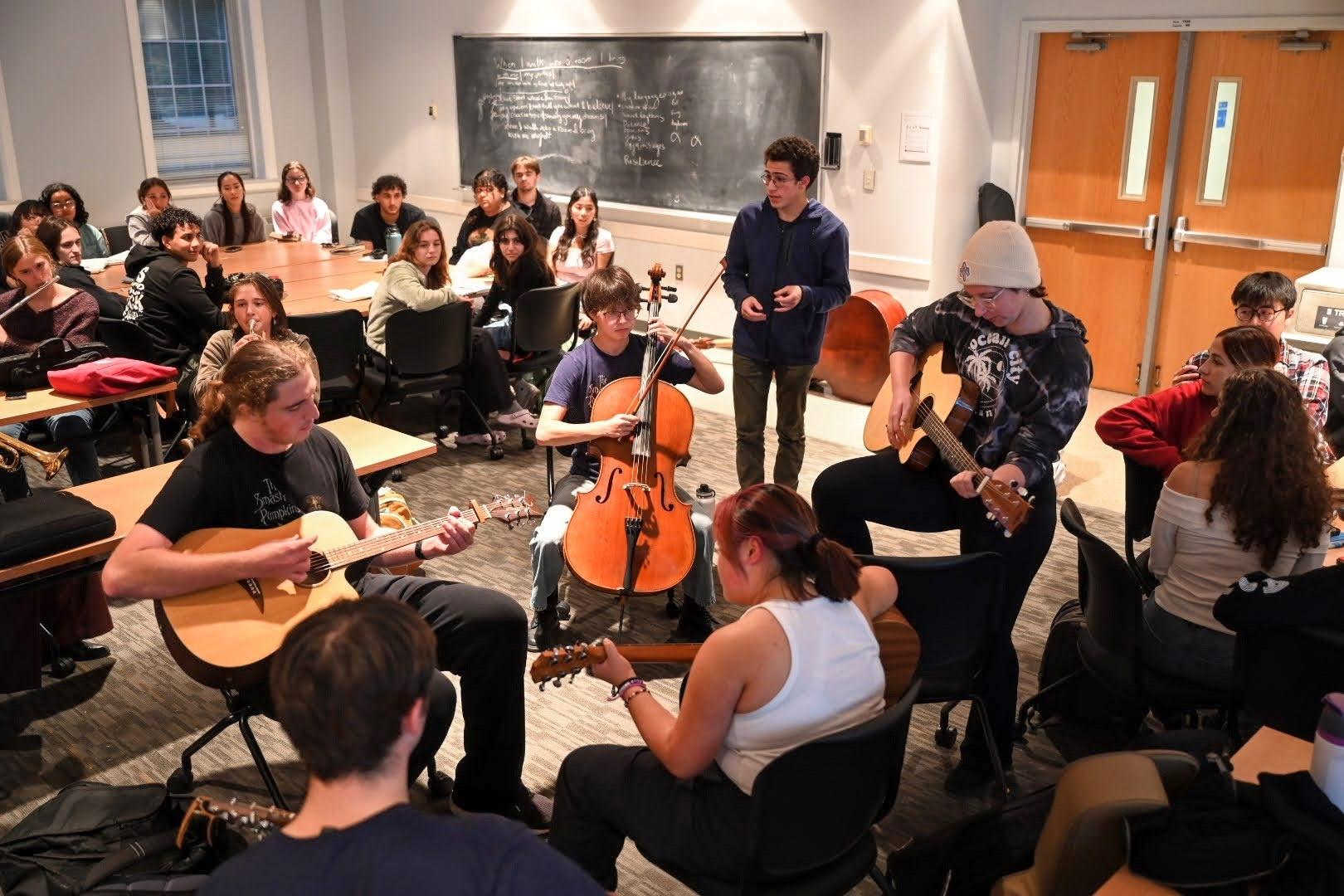
Through a mix of lectures, discussions, and guest artist workshops, and experiential projects, students consider (see our most recent “Year in Review” page for photos!):
- Vogue Dancing: How can art be used as a tool for resilience, resistance, and social chance?
- Artistic Consumption: How is artistic “taste” shaped by our social identities?
- Creative Research: How can empirical research, rapid iteration, and prototype testing improve your creative process?
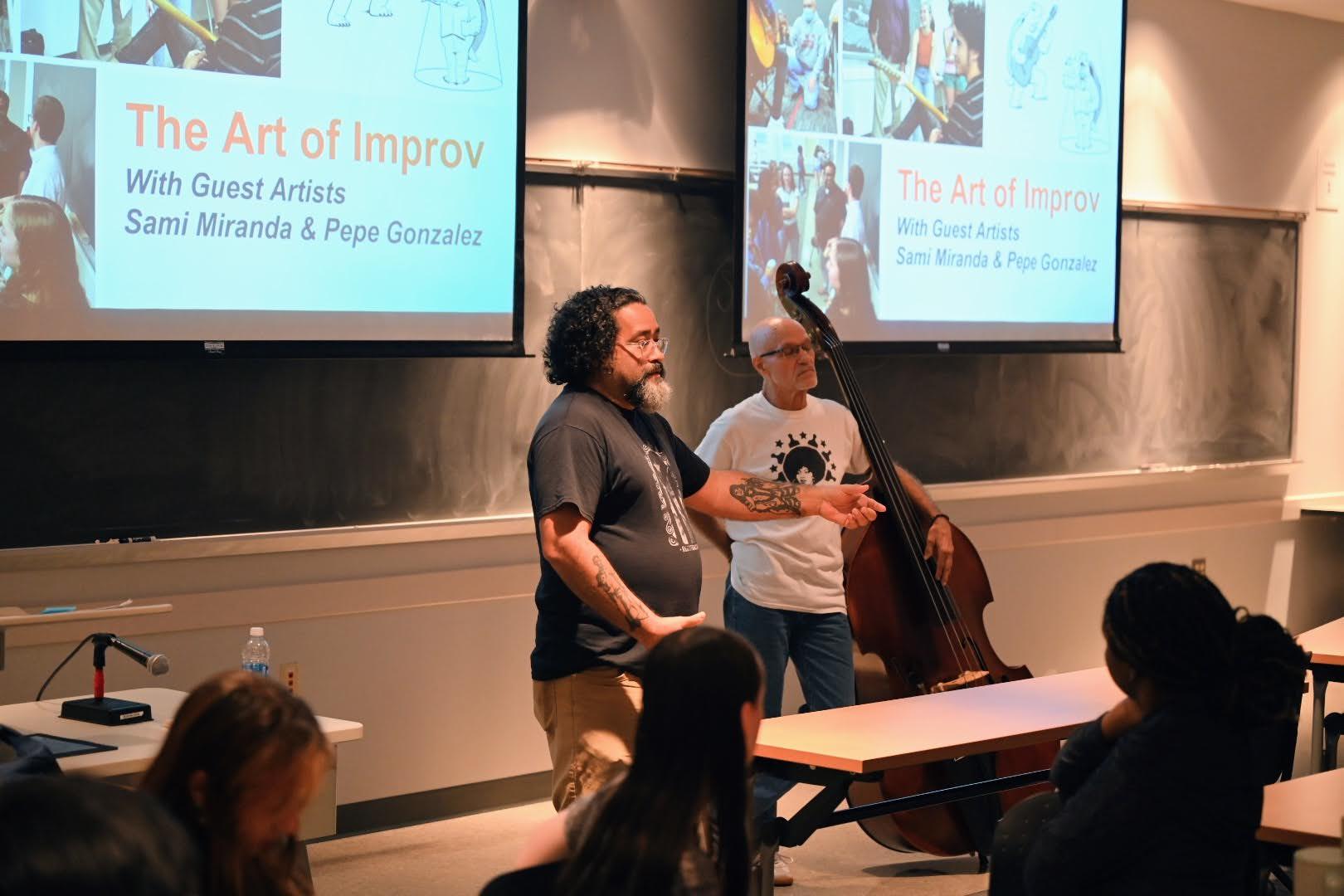
- Spoken Word Improv: How can the principles of improv inform and improve our everyday lives?
- Campus Galleries: How can slow-looking help us combat the pressures of a frenzied world?
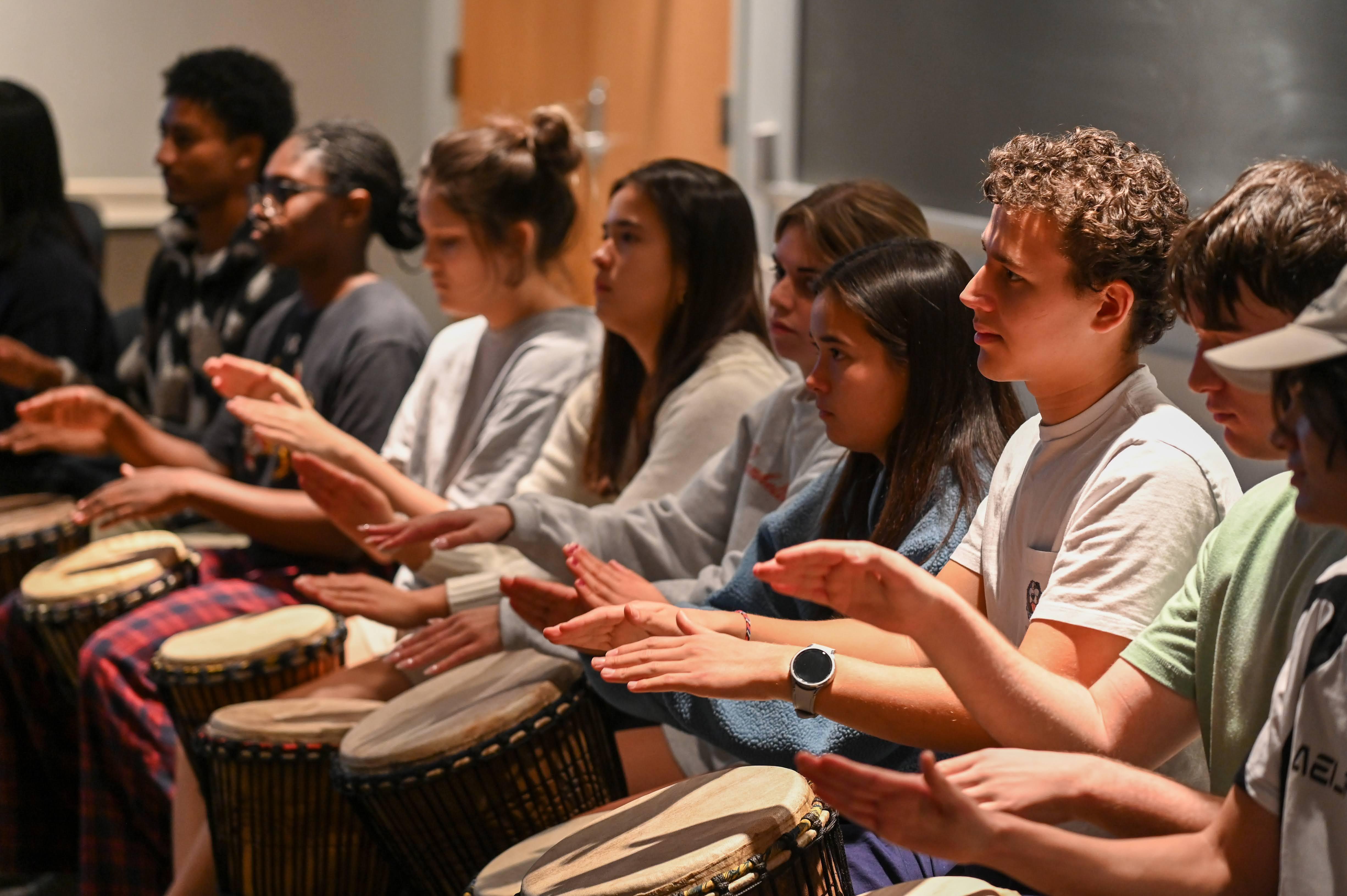
- West African Drumming: How can music build community, tell stories, and promote intercultural understanding?
I have been challenged to think differently, work cooperatively, embrace creativity and, most importantly, go beyond the limits I have set for myself. Because of this program, I can confidently say I feel infinitely more prepared for the “real world,” and for that confidence and growth, I could never be more grateful.
Other Learning Opportunities
Outside the classroom, Arts Scholars have many other opportunities….
Experience the arts first hand:
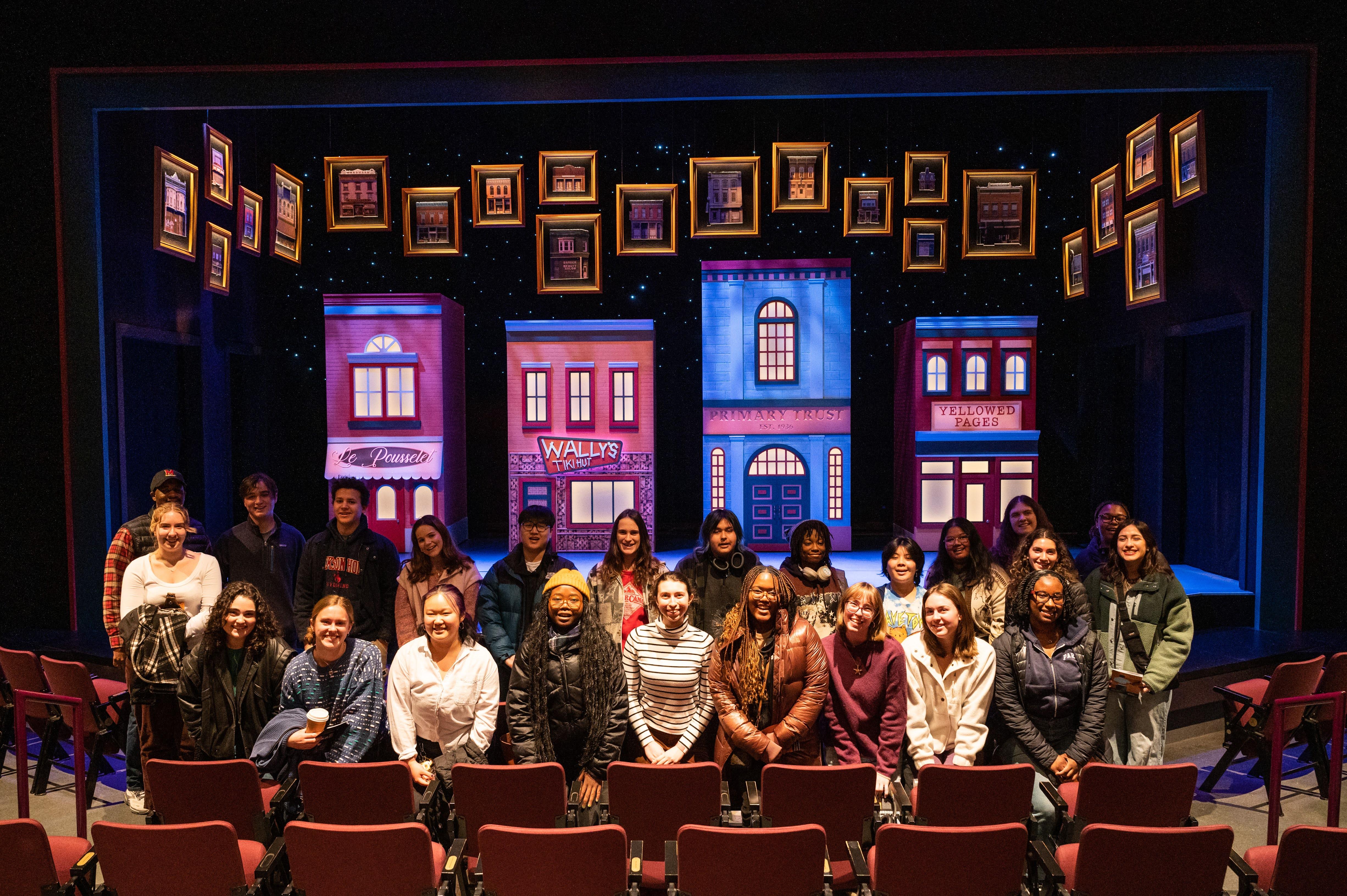
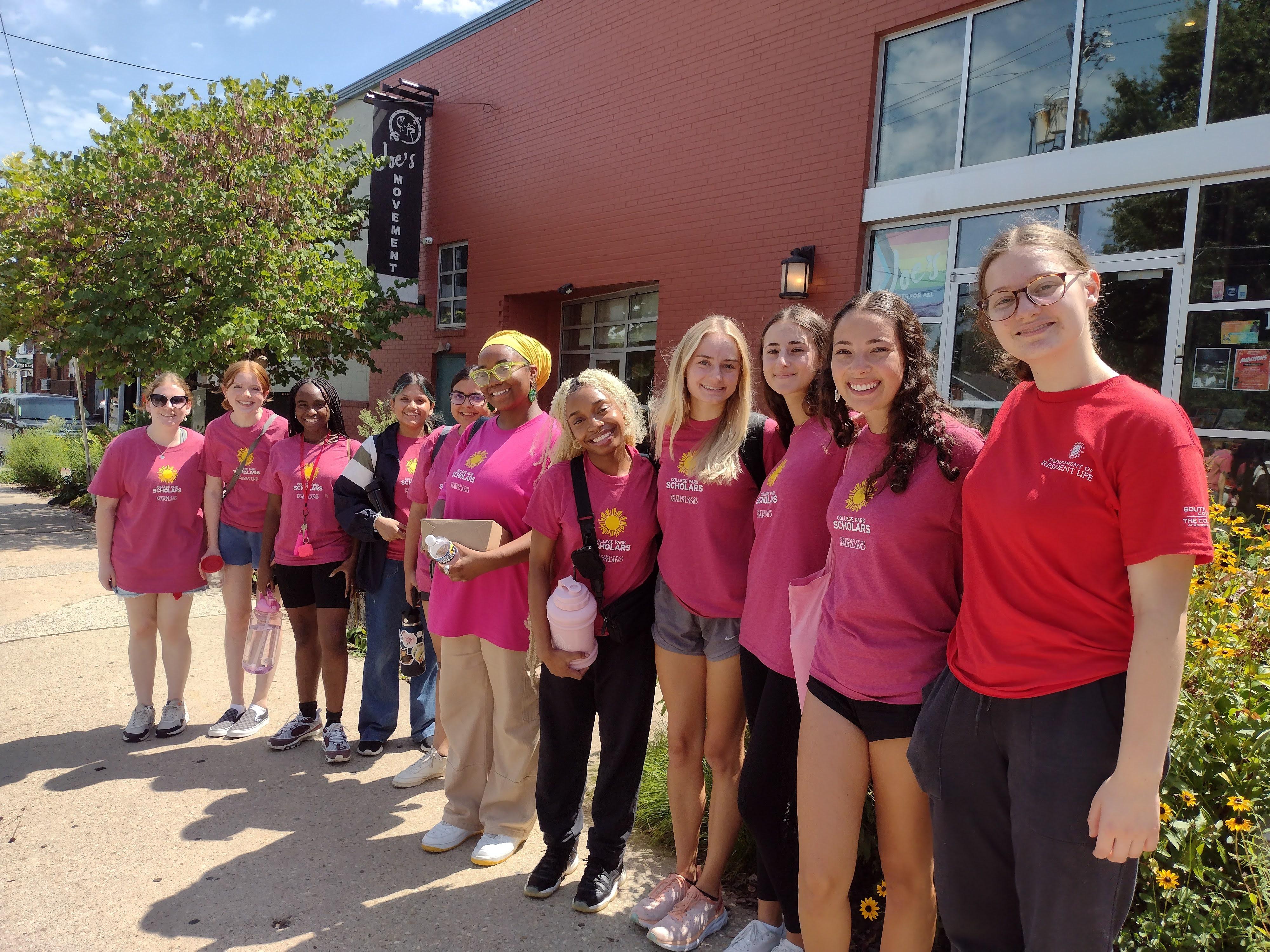
- Field trips: Each semester students visit locations such as The Clarice Performing Arts Center, the Everyman Theatre in Baltimore, the National Gallery of Art, and the National Museum of African American History and Culture.
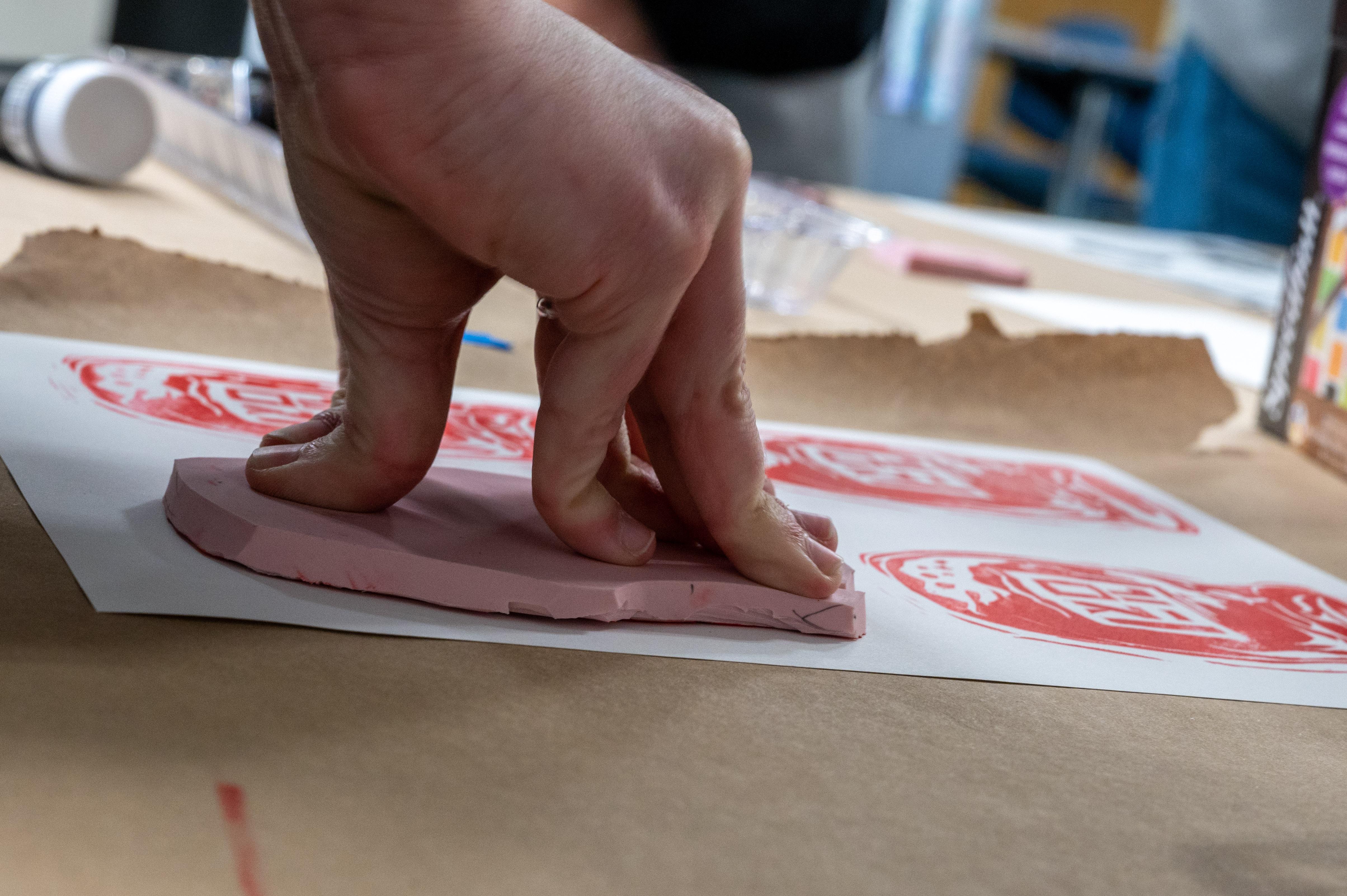
- Maker Mixer: Teaching Assistant led community building events that include crafting, visiting campus galleries and maker-spaces, and attending shows on campus.
Creative Capstones:
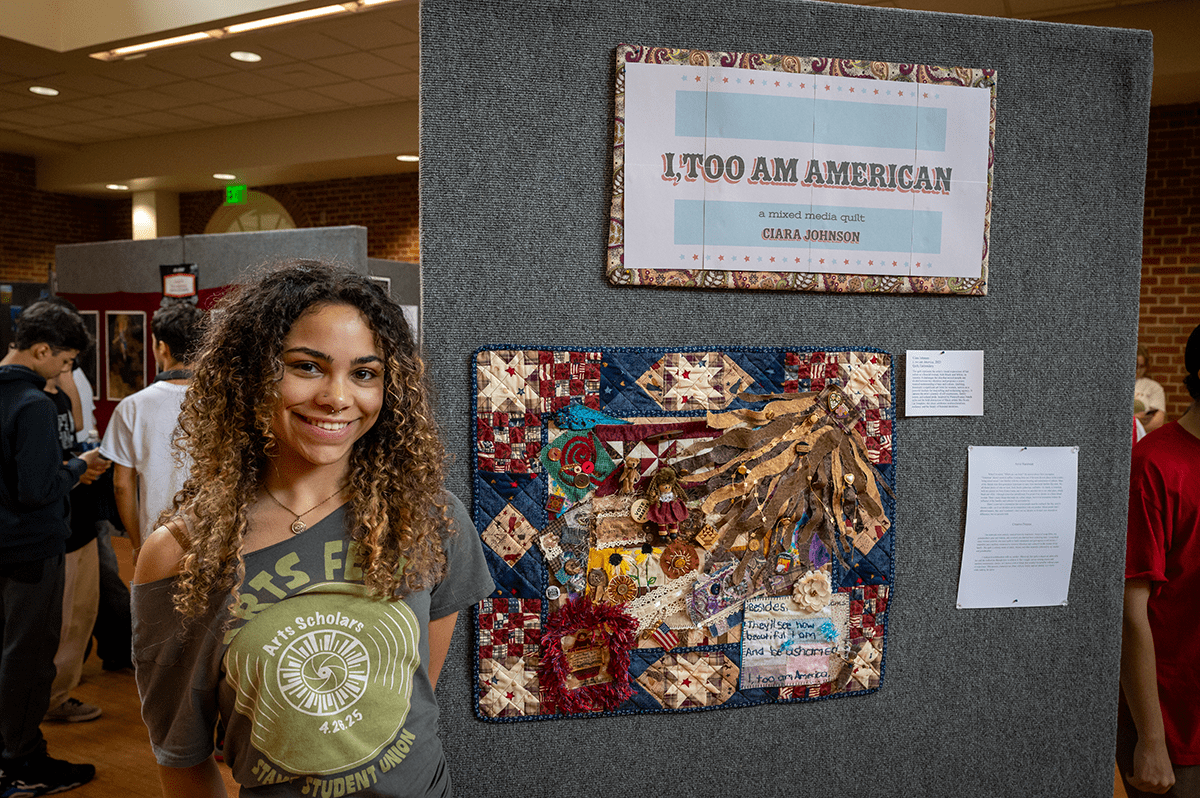
- Sophomores develop capstone projects - identifying a social issue of significance to them to be explored through an artistic medium of their choosing. The capstone project is about your unique view of the world and what you want your audience to understand or experience as a result.
- All capstones are displayed at ArtsFest- an annual exhibition of student work in the Stamp Student Union.
Leadership opportunities:
- Arts Media Team: Social Media & Newsletter assistants work with Arts Faculty to research, draft, and publish the weekly newsletters and Instagram posts to the community.
- Arts Teaching Assistants: Arts Scholars graduates build their skills and experience leading discussions, developing events, and serving as mentors to current students.
Curriculum Overview
Over the two-year program experience (four semesters), students will complete up to 6 credits of supporting courses that will count toward your Arts Scholars citation. In most cases, these will also fulfill General Education requirements. Note that your Scholars courses—colloquiums, capstone practicum and supporting courses—will generally be in addition to any courses you take to satisfy major requirements.
The following represents a typical two-year curriculum, but individual schedules may vary. Details about courses and requirements can be found on the Arts Citation Checklist.
| SEMESTER | COURSE | CREDITS |
|---|---|---|
| Semester 1 | CPSA 100: Colloquium I | 1 credit |
| Semester 2 | CPSA 101: Colloquium II | 1 credit |
| Semester 3 | CPSA 200: Colloquium III | 1 credit |
| Semester 4 | CPSA 201: Colloquium IV | 1 credits |
| CPSA 240: Service Learning; or CPSA 250: Research (DSSP); or CPSA 260: Peer Teaching (DSSP) |
2 credits 2 credits 2 credits |
|
| Semester 1, 2, 3, or 4 | Supporting Course (var. Gen Ed) Supporting Course (var. Gen Ed) Supporting Course (DVUP or DVCC) |
3 credits 3 credits 1-3 credits |
Sponsoring College
Faculty
The Diamondback: UMD students' dance workshop highlights Japanese Butoh style, May 2022
Arts News
Showering the Community With Support
In the parking lot of the First United Methodist Church in Hyattsville, Md., on a pleasant April morning, one vehicle stood out among the usual cars and SUVs. One of the two doors on a small silver trailer, with the slogan “Serve humbly. Encourage faithfully. Renew dignity” emblazoned on the back, swung open, and a man stepped outside.Founded by Public Leadership Scholars and UMD alum Omolayo Adebayo ’11, the Neighborhood Well sets up at the church from 9 a.m.-noon every second and fourth Saturday of the month, weather permitting, to offer not only showers, but also food, clothes, toiletries and a welcoming environment.
University of Maryland students transform the campus golf course into a living environmental laboratory
The University of Maryland Golf Course is transforming into a living laboratory, providing students with hands-on experience in environmental science and conservation.Environment, Technology and Economy Scholars Mario Dajani, a sophomore studying physics and math, and Preston Jackman, a second-year environmental science and policy student, took on the challenge of fixing a rain garden on the course.Watch the video below for the full story from WMAR2:
Historic Gift Fuels Record-Breaking Giving Day for College Park Scholars
COLLEGE PARK, MD. — On March 4, 2026, the University of Maryland united its entire community—faculty, staff, parents, friends, alumni, and students—for its annual campus-wide Giving Day, the largest single day of giving in support of the university’s mission.For College Park Scholars, the day became one for the record books: nearly $182,000 raised from over 100 donors, the most successful fundraising effort in the program’s history. Powering that milestone was a transformational $50,000 matching gift and endowment from alumni Melissa and Hart Rossman—a contribution that doubled every dollar donated and permanently established a new program fund to support future generations of Scholars.
Where Beauty Meets Science
For as long as she can remember, Kaia Ungerer (B.S. ’23, chemistry) has been obsessed with beauty products, from skin creams and serums to shampoos and conditioners, each with its own unique combination of ingredients, textures and fragrances.
UNWIND Magazine Returns to Highlight Media Scholars and Terp Life at UMD–Expanded Spring 2026 Edition
COLLEGE PARK, MD – Following its successful relaunch in Spring 2025, UNWIND Magazine continues its momentum with the Spring 2026 issue, further amplifying the voices of students in the Media, Self and Society Scholars program at the University of Maryland. Building on last year’s return, the new edition expands the magazine’s storytelling with deeper reporting, fresh visual features and new perspectives on traditions and communities that shape campus life.Written, edited, and produced entirely by students, UNWIND remains a platform for emerging media professionals to explore the Terp experience–from untold campus stories to cultural touchstones to the evolving identity of Maryland today.
Mckinley’s Climb
In the “fireman’s carry,” a wrestler hoists an opponent over their shoulders before flipping them to the mat. It sounds like a move favored by mountainous pros like the Rock or the Big Show, but it’s also the favorite of a freckle-faced 5’5” Terp who stands among the nation’s best female collegiate grapplers.Then-freshman Mckinley Jovanovic, who is a Public Leadership scholar, won last year’s National Collegiate Wrestling Association (NCWA) Mideast regional tournament in the women’s 131-pound weight class—a first for a UMD woman in any class—and finished fifth in nationals to net All-American honors.